Why Is Metformin Being Discontinued? What You Need to Know
Metformin Recall Checker
Check Your Metformin Batch
Many people with type 2 diabetes have noticed something unsettling: their metformin prescription is suddenly hard to find. Pharmacies are running out. Some batches are being pulled from shelves. And now, patients are asking: Why is metformin being discontinued? The short answer? It’s not being discontinued everywhere - but parts of it are, for very specific reasons.
Not all metformin is gone - just certain versions
Metformin itself isn’t disappearing. It’s still the most prescribed diabetes medication in the world, used by over 120 million people. The issue isn’t with the drug itself, but with specific extended-release (ER) formulations made by certain manufacturers. In late 2024 and early 2025, the U.S. Food and Drug Administration (FDA) and the UK’s Medicines and Healthcare products Regulatory Agency (MHRA) issued voluntary recalls for several lots of metformin ER tablets because they contained levels of N-nitrosodimethylamine (NDMA) above the safety limit.
NDMA is a known environmental contaminant and possible carcinogen. It doesn’t show up in every batch - only in some from specific production lines. The problem was traced back to changes in how certain manufacturers synthesized the drug. A chemical reaction during production created trace amounts of NDMA. When found in high concentrations over long-term use, it could increase cancer risk. That’s why regulators didn’t ban metformin - they asked companies to pull only the contaminated lots.
Why did this happen now?
NDMA wasn’t always monitored in metformin. Back in 2018, when it was found in blood pressure meds like valsartan, regulators started testing other drugs. By 2020, they began checking metformin. Most batches were clean. But as manufacturing shifted to new facilities - especially in India and China - some suppliers didn’t adjust their processes properly. A change in solvent use or temperature control in one plant led to NDMA buildup in a few batches.
By 2024, testing became routine. When labs found NDMA levels above 96 nanograms per tablet (the FDA’s daily limit), those lots were flagged. The recalls weren’t sudden. They were the result of months of testing and data review. The public only noticed because patients started getting calls from pharmacies saying their prescription couldn’t be filled - and the media picked up on it.
What does this mean for patients?
If you’re taking metformin ER and your pharmacy says it’s out of stock, don’t panic. Your doctor doesn’t need to switch you to a completely new drug. They’ll likely move you to one of these options:
- Immediate-release (IR) metformin - still widely available and just as effective. You’ll take it two or three times a day instead of once.
- Another brand of extended-release metformin - not all manufacturers had contamination. Brands like Glucophage XR, Fortamet, and Glumetza are still on shelves.
- A different class of medication - if you can’t tolerate IR metformin, your doctor might suggest SGLT2 inhibitors (like empagliflozin) or GLP-1 agonists (like semaglutide), which also help with weight loss and heart protection.
Studies show that switching from contaminated ER to clean IR metformin doesn’t affect blood sugar control. In fact, some patients report fewer stomach issues with IR because they can adjust dosing more precisely.
How to check if your metformin is affected
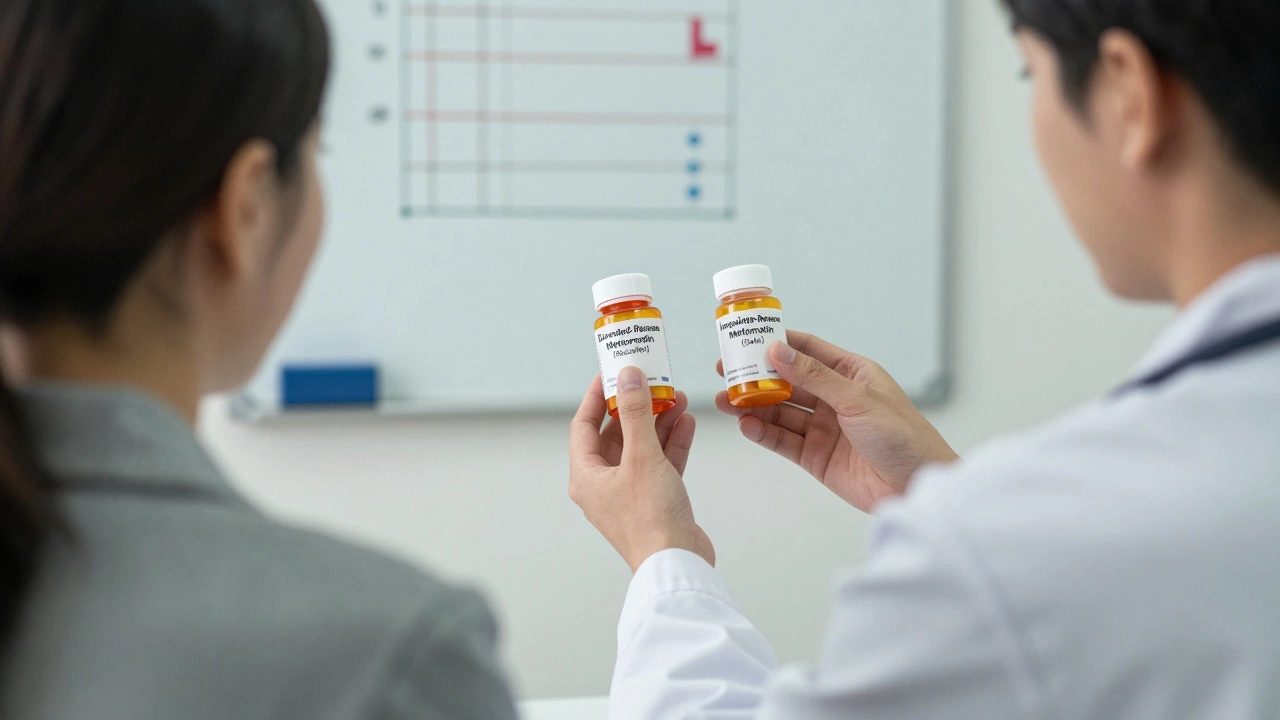
Not all metformin is unsafe. Only specific lot numbers from certain makers are recalled. Here’s how to check:
- Look at the label on your bottle. Find the manufacturer name and lot number.
- Visit the FDA’s Recalls page (or your country’s health agency site) and search for "metformin".
- Compare your lot number to the list. If it matches, stop taking it and call your pharmacy.
- If you’re unsure, ask your pharmacist - they can check the batch for you.
Most metformin on the market today is safe. Only about 3% of all metformin ER tablets sold in the U.S. were part of recalls. In the UK, the number was even lower.
What’s being done to fix this?
Manufacturers are changing their production methods. New facilities now use different solvents, stricter temperature controls, and real-time NDMA monitoring. The FDA now requires all metformin makers to test every batch before release. Some companies have even switched to entirely new synthesis routes that don’t produce NDMA at all.
By early 2025, most recalls were resolved. New batches with clean testing results are now flooding pharmacies. The shortage is easing - but it took time because metformin is produced at such a massive scale. Over 10 billion tablets are made each year. Replacing contaminated stock without causing a global supply crunch isn’t easy.
What you should do right now
Don’t stop taking metformin unless your doctor tells you to. High blood sugar is far more dangerous than the tiny risk from NDMA. If your pharmacy can’t refill your prescription:
- Call your doctor immediately - they can send a new prescription for a different formulation.
- Ask if you can switch to immediate-release metformin - it’s cheaper and just as effective.
- Don’t buy metformin from online pharmacies you don’t trust. Some unregulated sellers are repackaging old stock.
- Keep your blood sugar checked. If you notice unusual thirst, fatigue, or blurred vision, contact your provider.
Most patients who switched to clean metformin - whether IR or a different brand - saw no change in their A1C levels. One 2025 study of 2,300 patients showed that 94% maintained stable glucose control after switching.
Is this the start of something bigger?
It’s possible. This incident exposed how global drug supply chains can be fragile. Metformin is cheap, generic, and made in many countries. When one factory cuts corners, it affects millions. Regulators are now pushing for better oversight of overseas manufacturers. The EU and UK are working on shared testing standards. The U.S. is increasing inspections.
But for now, the takeaway is simple: metformin isn’t going away. The problem was a small number of contaminated lots - not the drug itself. You can still get safe, effective metformin. You just need to know which one to ask for.
Is metformin still safe to take?
Yes, most metformin is still safe. Only specific extended-release lots from certain manufacturers were recalled due to trace amounts of NDMA. Immediate-release metformin and other brands not affected by recalls are widely available and continue to be recommended as a first-line treatment for type 2 diabetes.
What’s the difference between immediate-release and extended-release metformin?
Immediate-release (IR) metformin is taken two or three times a day with meals and works quickly. Extended-release (ER) is taken once daily and releases the drug slowly over time. Both lower blood sugar equally well, but ER causes fewer stomach side effects for some people. If ER is unavailable, IR is a perfectly safe and effective alternative.
Can I switch to a different diabetes medication?
You don’t need to unless you can’t tolerate metformin. SGLT2 inhibitors and GLP-1 agonists are alternatives that also help with weight loss and heart health, but they’re more expensive. Metformin remains the most cost-effective, well-researched option. Switching should only happen if your doctor recommends it.
How do I know if my metformin is part of the recall?
Check the lot number on your bottle against official recall lists from your country’s health agency - like the FDA in the U.S. or the MHRA in the UK. If you’re unsure, ask your pharmacist. They can verify the batch and tell you if it’s safe.
Will metformin become unavailable forever?
No. The recalls were limited to specific contaminated lots. Manufacturers have fixed their production processes, and new batches are now being tested and released. Metformin remains one of the most essential medicines in the world, and supply is returning to normal.
Final thought
Metformin isn’t being discontinued - it’s being cleaned up. This isn’t the end of the drug. It’s a correction. And for patients, it’s a reminder: stay informed, don’t panic, and work with your doctor. The right version of metformin is still out there - and it’s still the best first step for managing type 2 diabetes.