Do They Have to Break Your Ribs for Open Heart Surgery?
When you hear the words open heart surgery, it’s easy to picture something brutal-metal tools, cracking bones, a long road to recovery. And the biggest fear? That they have to break your ribs. The truth is, most people imagine their ribs being shattered like kindling. But that’s not what happens. Not even close.
What Actually Happens During Open Heart Surgery?
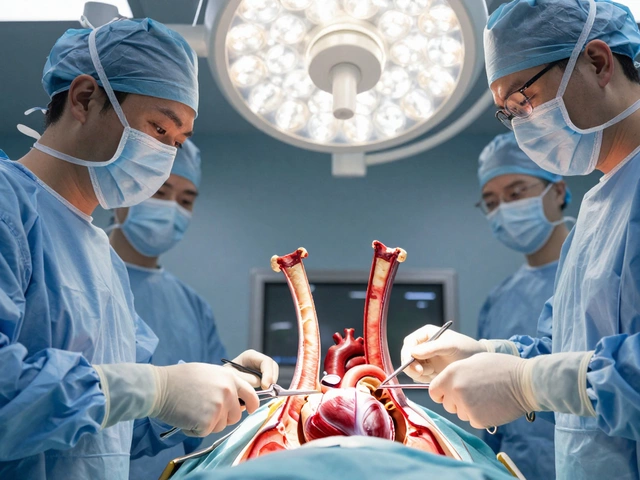
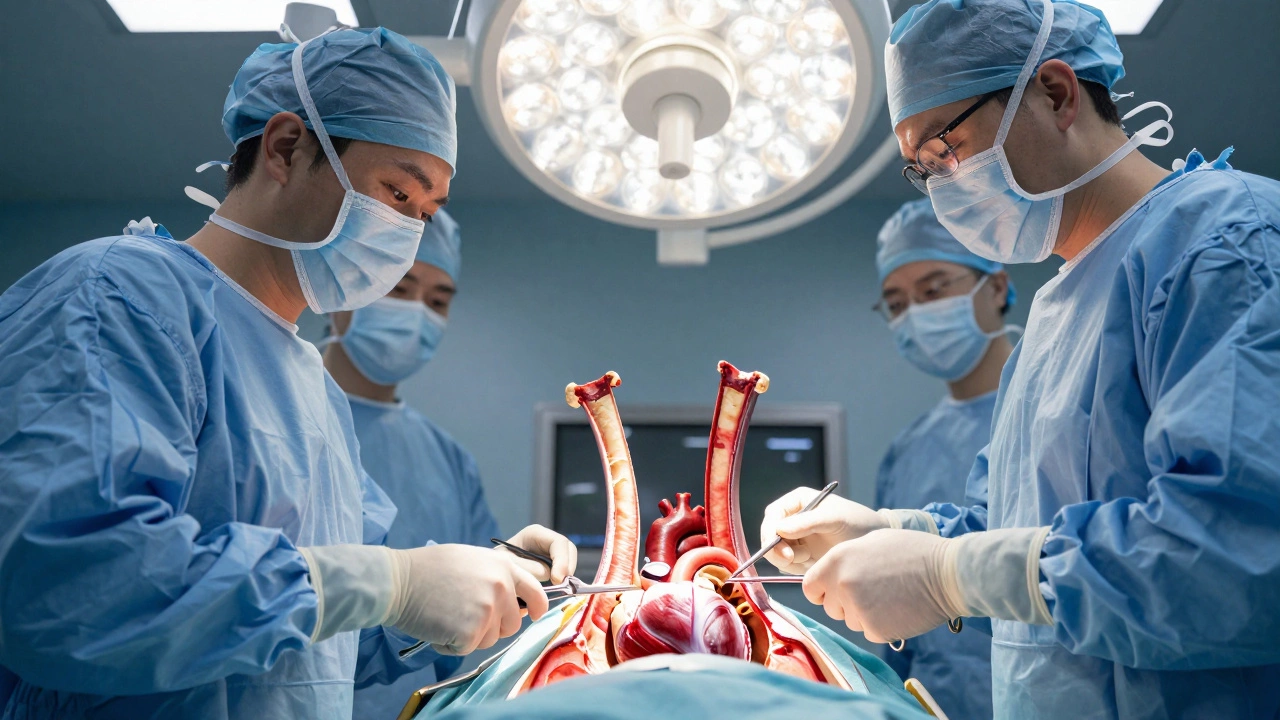
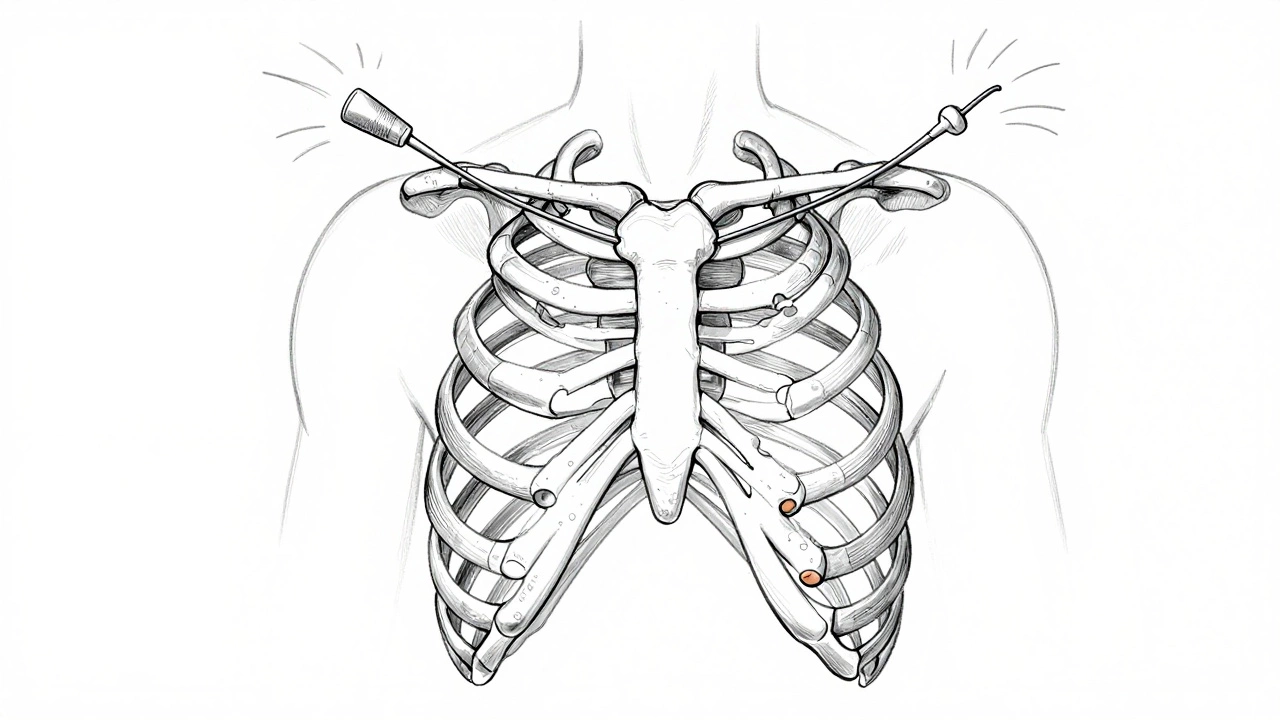
Open heart surgery doesn’t mean breaking ribs. It means making a careful cut down the center of your chest and dividing the sternum-the long, flat bone that connects your ribs. This is called a sternotomy. The surgeon uses a special saw, not a hammer or chisel. It’s precise, controlled, and designed to minimize damage. The ribs themselves stay completely intact. They’re moved aside like a door on hinges, not broken or cracked.
This approach gives the surgeon full access to your heart. You need that space to stop your heart, connect you to a heart-lung machine, and perform repairs like bypassing blocked arteries, replacing valves, or fixing congenital defects. Without opening the chest properly, those procedures simply wouldn’t be possible.
Why the Myth Persists
Why do so many people think ribs are broken? It’s partly because of how it feels afterward. Your chest will ache. It will feel tight. Breathing deeply might hurt. That’s not from broken ribs-it’s from the sternum being cut and then wired back together. The wires hold the bone in place as it heals, which takes about 6 to 8 weeks. During that time, your chest feels stiff and sore, especially when you cough, laugh, or move suddenly. That pain gets mistaken for broken bones.
Also, movies and TV shows love drama. They show surgeons swinging hammers, ribs snapping, blood everywhere. Real surgery is quiet, methodical, and sterile. No one’s cracking bones. No one’s yelling. It’s all calm, controlled movements under bright lights.
What You’ll Feel After Surgery
After your surgery, you’ll likely be in pain-but not because your ribs are broken. You’ll feel pressure, tightness, and tenderness across your chest. That’s the sternum healing. The wires holding it together are made of stainless steel. They’re not meant to be removed unless there’s a complication. Most people keep them for life. They don’t set off metal detectors, and they don’t interfere with MRIs.
Doctors will give you pain meds, but you’ll also be taught breathing exercises. These aren’t just to help you recover faster-they’re to prevent pneumonia. Lying still after surgery makes your lungs collapse slightly. Deep breaths keep them open. You’ll be encouraged to sit up, walk short distances, and even blow into a special device called an incentive spirometer. It’s not fun, but it’s critical.
Are There Alternatives to Opening the Chest?
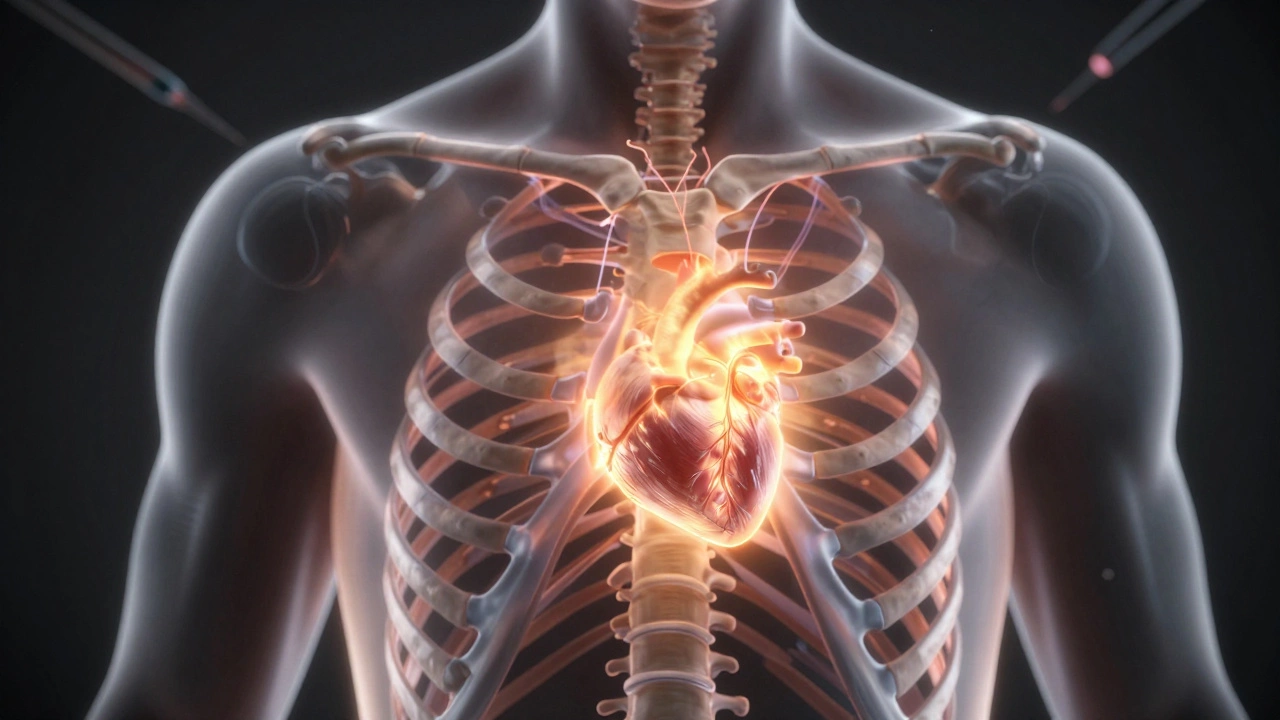
Yes. Not all heart procedures require a full sternotomy. Over the last 20 years, minimally invasive techniques have become more common. These include:
- Minimally invasive direct coronary artery bypass (MIDCAB)-a small incision between the ribs, no sternum cut. Used for one or two blocked arteries.
- Robotic-assisted surgery-tiny tools guided by a surgeon from a console. Incisions are the size of a keyhole.
- Transcatheter procedures-like TAVR for aortic valve replacement. A catheter is threaded from the groin or chest up to the heart. No opening needed at all.
These options aren’t right for everyone. If you need multiple bypasses, a complex valve repair, or have other heart conditions, the traditional sternotomy is still the safest and most reliable method. Your surgeon will pick the best approach based on your heart’s condition, your age, and your overall health-not just what sounds less scary.
Recovery: What to Expect
Recovery from open heart surgery takes time, but it’s not the nightmare most people fear. Most patients leave the hospital in 5 to 7 days. Within 2 weeks, many can walk a mile. By 6 weeks, most are back to light activities. Full recovery-meaning you can lift heavy things, drive, or return to work-usually takes 2 to 3 months.
Here’s what helps:
- Walking daily-even just around the house
- Avoiding lifting more than 5 to 10 pounds for the first 6 weeks
- Not driving until your doctor says it’s safe (usually 4 to 6 weeks)
- Attending cardiac rehab, which includes monitored exercise and education
Cardiac rehab isn’t optional-it’s one of the biggest predictors of long-term survival after heart surgery. Studies show people who complete rehab reduce their risk of another heart event by nearly 30%.
When to Worry
Some discomfort is normal. But if you notice any of these, call your doctor right away:
- Fever over 101°F (38.3°C)
- Redness, swelling, or fluid leaking from the incision
- Sudden shortness of breath or chest pain that doesn’t go away with rest
- Feeling faint or dizzy when standing
These aren’t signs of broken ribs-they’re signs of infection, blood clots, or other complications that need quick attention.
Real Stories, Real Results
Take James, 68, who had a triple bypass in 2024. He thought he’d be stuck in bed for months. Instead, he walked his first lap around the hospital hallway the day after surgery. By week three, he was gardening. He still feels the occasional tug in his chest, especially when he laughs too hard. But he says, "I didn’t get my ribs broken. I got my heart fixed. That’s worth the soreness."
Or Maria, 55, who had a valve replacement using a smaller incision. She was back to teaching yoga in 8 weeks. Her incision is now a thin, flat line-hard to see unless you’re looking for it.
These aren’t rare cases. They’re the norm now.
Final Answer: No, Your Ribs Aren’t Broken
No, they don’t break your ribs for open heart surgery. The sternum is cut, not shattered. Your ribs are gently spread apart and left untouched. The fear comes from movies, myths, and misunderstanding. The reality? It’s a precise, life-saving procedure with a clear path to recovery.
If you’re facing this surgery, know this: your body is strong. Your medical team is skilled. And your ribs? They’re going to be just fine.
Do they really cut through your breastbone during open heart surgery?
Yes. The sternum, or breastbone, is cut down the middle in a procedure called a sternotomy. This gives the surgeon access to your heart. The ribs are not broken-they’re held apart with a retractor. The sternum is then wired back together with stainless steel wires after the surgery.
How long does it take for the sternum to heal after open heart surgery?
The sternum typically takes 6 to 8 weeks to heal enough for normal activity. Full strength returns over 3 to 6 months. During healing, you’ll need to avoid lifting heavy objects, pushing, pulling, or reaching overhead. Your doctor will give you specific activity limits.
Will I feel the wires in my chest forever?
Most people don’t feel the wires at all. They’re buried under skin and muscle. In rare cases, people report a slight sensation if they press directly on the incision, but it’s not painful. The wires are made of medical-grade stainless steel and are designed to stay in place for life. They don’t interfere with X-rays, MRIs, or metal detectors.
Are there surgeries that don’t require opening the chest at all?
Yes. Procedures like TAVR (transcatheter aortic valve replacement), balloon angioplasty, and some types of mitral valve repairs can be done through small tubes inserted in the groin or chest. These are called minimally invasive or catheter-based procedures. They’re not suitable for every patient, but they’re becoming more common for those who are older or have higher surgical risk.
Can I sleep on my side after open heart surgery?
Yes, but not right away. Most doctors recommend sleeping on your back for the first 4 to 6 weeks to avoid putting pressure on the sternum. After that, side sleeping is usually fine. Use pillows to support your chest if it feels uncomfortable. Many people find sleeping in a recliner easier during early recovery.