What Do IVF Injections Do to Your Body?
IVF Medication Dose Calculator
Personalized Dose Calculator
Enter your details to see your estimated FSH injection dose range. Always follow your doctor's specific instructions.
This is an educational estimate only. Your actual dose will be determined by your fertility specialist based on your full medical profile.
When you start IVF, one of the first things you’ll hear about is the injections. They’re not optional. They’re not a suggestion. They’re the foundation of the whole process. And if you’ve never had a shot in your life besides a flu vaccine, the idea of giving yourself daily injections for weeks can feel overwhelming. But what do these injections actually do to your body? It’s not magic. It’s biology. And understanding it makes the whole thing a lot less scary.
They’re not just one shot - they’re a sequence
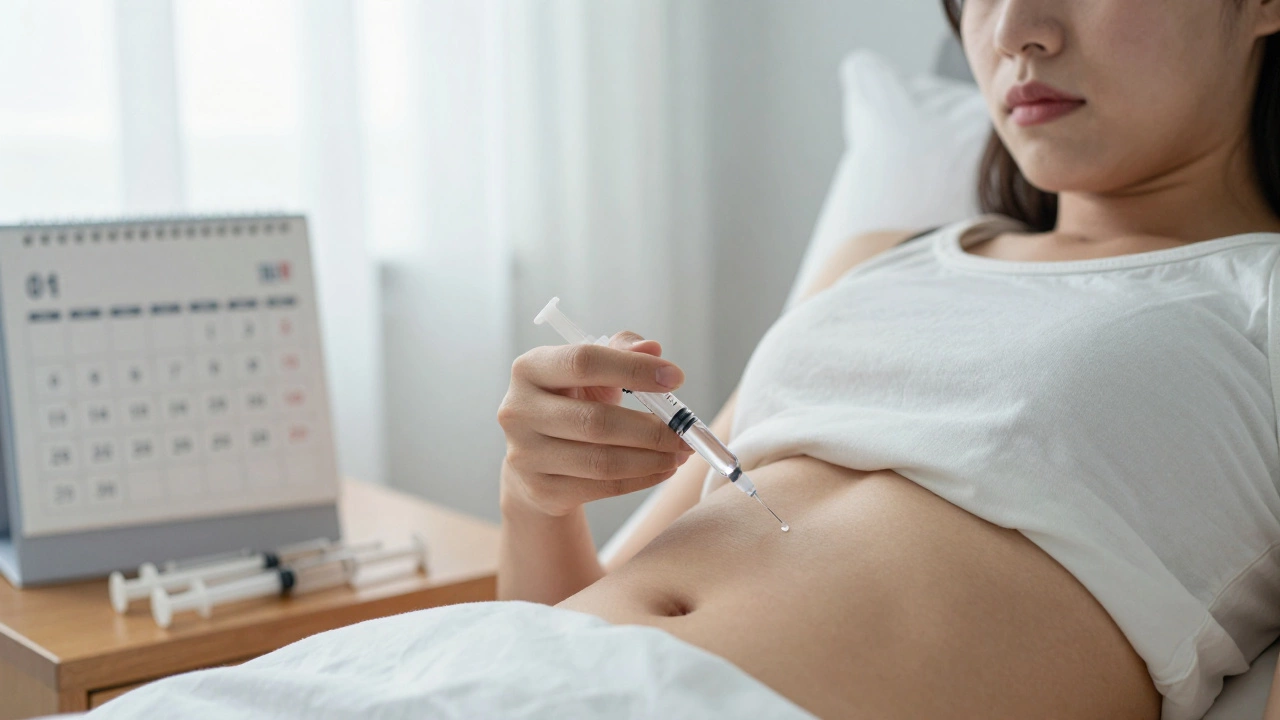
- First, you get a daily shot of a gonadotropin-releasing hormone (GnRH) agonist or antagonist. This isn’t meant to help you get pregnant right away. It’s meant to shut down your natural cycle. Think of it like hitting pause on your ovaries. Without this step, your body might release an egg too early - before the clinic can collect it.
- Then comes the main event: follicle-stimulating hormone (FSH) injections. These are the workhorses. FSH tells your ovaries to grow multiple follicles instead of just one. In a normal cycle, your body picks one egg to mature. In IVF, we want 8 to 15. That’s how you increase your chances of getting a viable embryo.
- After about 8-12 days of FSH, you get a trigger shot - usually hCG or a GnRH agonist. This mimics the LH surge that naturally happens right before ovulation. It tells your eggs to finish maturing so they’re ready to be picked up.
Each step is timed down to the hour. Miss a shot? It can throw off the whole schedule. That’s why clinics give you detailed calendars and apps to track every injection.
What’s happening inside your body?
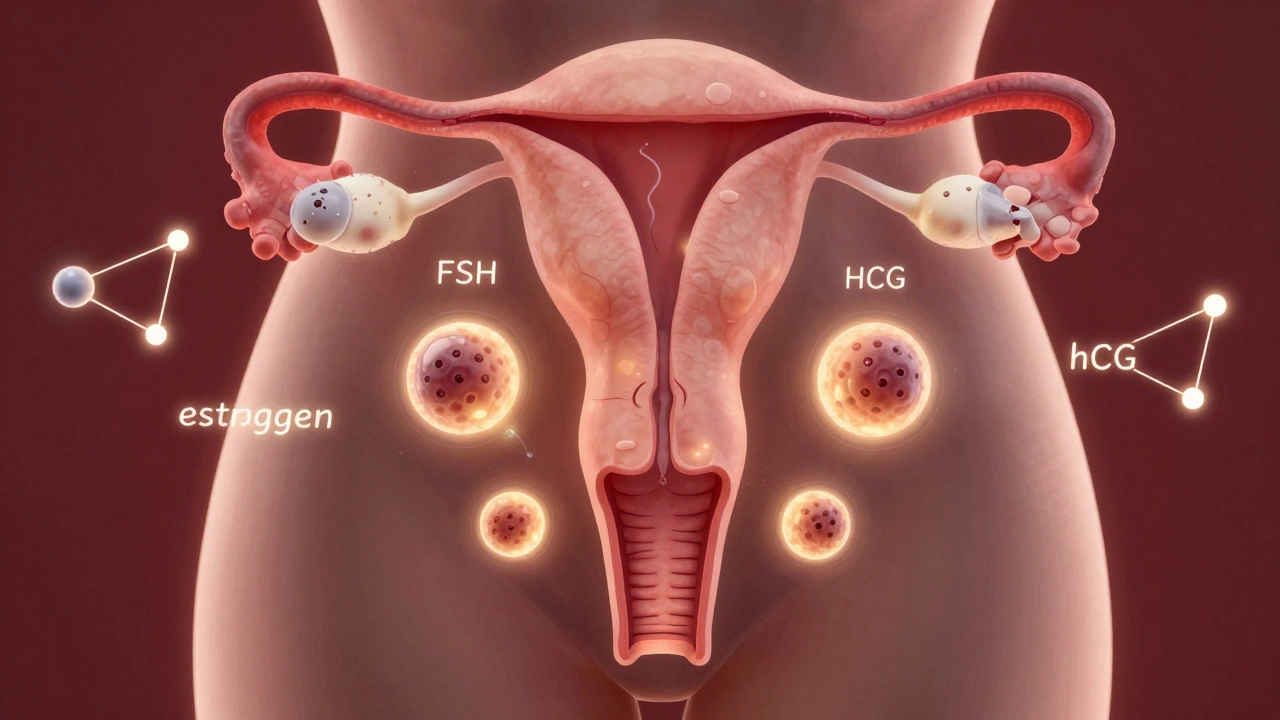
Your ovaries are the main target. Normally, they produce one egg per month. With IVF injections, they’re being pushed into overdrive. The FSH injections cause multiple follicles - tiny fluid-filled sacs - to grow. Each follicle holds one egg. As they grow, your estrogen levels climb. That’s why many people feel bloated, heavy, or even a little dizzy. It’s not just water weight. It’s your body responding to estrogen levels that are 10 to 20 times higher than normal.
Your uterus isn’t left out, either. The hormones also prepare the lining. Estrogen thickens it. Progesterone, often added after egg retrieval, makes it sticky and welcoming for an embryo. This is why some people feel crampy or tender in their lower belly - it’s not just your ovaries working hard. Your uterus is getting ready too.
The side effects aren’t just physical
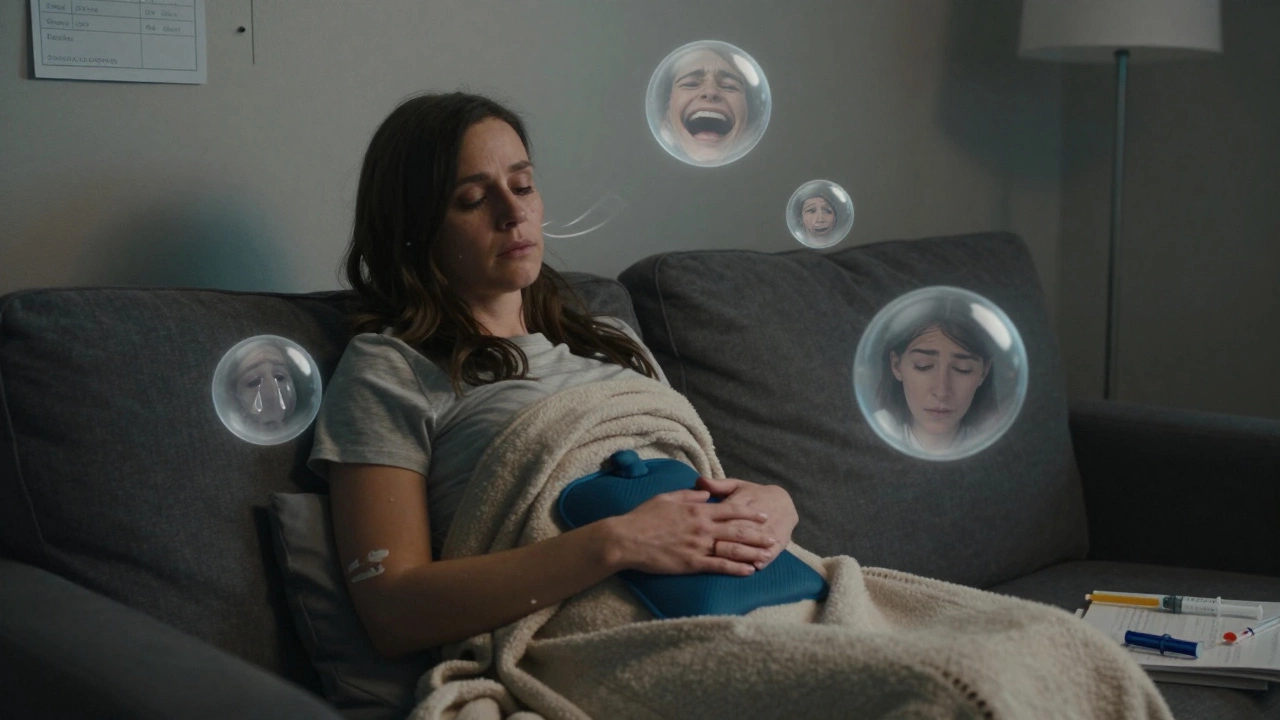
Yes, you’ll feel bloated. Your breasts might get tender. You might have headaches or mood swings. But the emotional toll is real too. Hormones don’t just affect your ovaries. They affect your brain. Serotonin and dopamine levels shift. One minute you’re laughing. The next, you’re crying over a commercial. It’s not "being dramatic." It’s biochemistry.
A 2023 study in the European Journal of Obstetrics & Gynecology found that over 60% of women undergoing IVF reported moderate to severe mood changes during the stimulation phase. That’s not rare. That’s common. And it’s not your fault. It’s the drugs.
Some people feel like they’re losing control. That’s normal. You’re on a strict schedule. You’re injecting yourself. You’re getting blood tests every few days. You’re being told what to eat, what to avoid, when to rest. It’s exhausting. And yes, it’s okay to say that out loud.
What about long-term effects?
People worry. "Will this mess up my hormones forever?" "Will it make me gain weight permanently?" The short answer: no. Once the cycle ends and the hormones leave your system - usually within a week or two - your body resets. Your natural cycle returns. Most women get their period within 14 days after egg retrieval.
There’s no evidence that IVF injections cause early menopause or damage your ovaries. The eggs you’re stimulating were going to die anyway. In a natural cycle, 10-20 eggs start developing, but only one wins. The rest are absorbed by your body. IVF just rescues the ones that would’ve been lost.
One rare but serious risk is ovarian hyperstimulation syndrome (OHSS). It happens in less than 2% of cycles. Symptoms include severe bloating, nausea, rapid weight gain, and trouble breathing. If you feel this, call your clinic immediately. Most cases are mild and go away on their own. But it’s why clinics monitor you closely with ultrasounds and blood tests.
Why do some people react differently?
Two women, same dose, same protocol - totally different experiences. Why? It comes down to body weight, age, and ovarian reserve. A younger woman with high AMH levels might need less medication. An older woman or someone with low reserves might need higher doses. Your doctor doesn’t guess. They use your AMH, FSH, and antral follicle count to calculate your starting dose.
Body weight matters too. Heavier individuals often need higher doses because hormones get diluted in more tissue. That’s why your dose isn’t the same as your friend’s. It’s not a one-size-fits-all.
What can you do to make it easier?
- Keep a journal. Write down how you feel each day - physically and emotionally. It helps you see patterns and gives your doctor useful info.
- Hydrate. Drink more water than usual. It helps with bloating and keeps your blood flowing well.
- Move gently. Walking helps. Heavy lifting? Skip it. Yoga? Yes. HIIT? No.
- Ask for support. Talk to someone who’s been through it. Online groups, counselors, or even a trusted friend who listens without fixing.
- Don’t feel guilty for needing help. If you’re struggling with the injections, ask for a nurse to demonstrate. Or get a partner to help. There’s no shame in that.
It’s not just about getting pregnant
IVF injections aren’t just tools to make you fertile. They’re a way to take control of a process that’s normally unpredictable. For many, this is the first time they’ve had a say in their own fertility. That’s powerful. Even if the cycle doesn’t work, the fact that you showed up, did the shots, showed up for the scans - that matters.
These injections don’t create life. They give your body the chance to do what it was designed to do - but with more control, more precision, and more support.
It’s messy. It’s intense. It’s exhausting. But it’s also one of the most medically precise things modern medicine can do. And that’s worth understanding.