What Do Indians Use to Wash Their Hair? Traditional and Modern Secrets
Ayurvedic Hair Care Routine Planner
Select your primary hair concern to discover the traditional Indian ingredients and rituals recommended for your hair type.
Your Personalized Ayurvedic Plan:
⚠️ Safety Tip: Always perform a patch test on a small area of skin before full application. Be careful to avoid getting Reetha in your eyes as it may sting.
- Traditional washing relies on saponins from plants like Reetha and Shikakai.
- Oil massaging (Champi) is a mandatory pre-wash ritual.
- Amla provides the Vitamin C needed for follicle strength.
- Modern Indian hair care is a hybrid of ancient herbs and contemporary science.
The Natural Soap Makers: Reetha and Shikakai
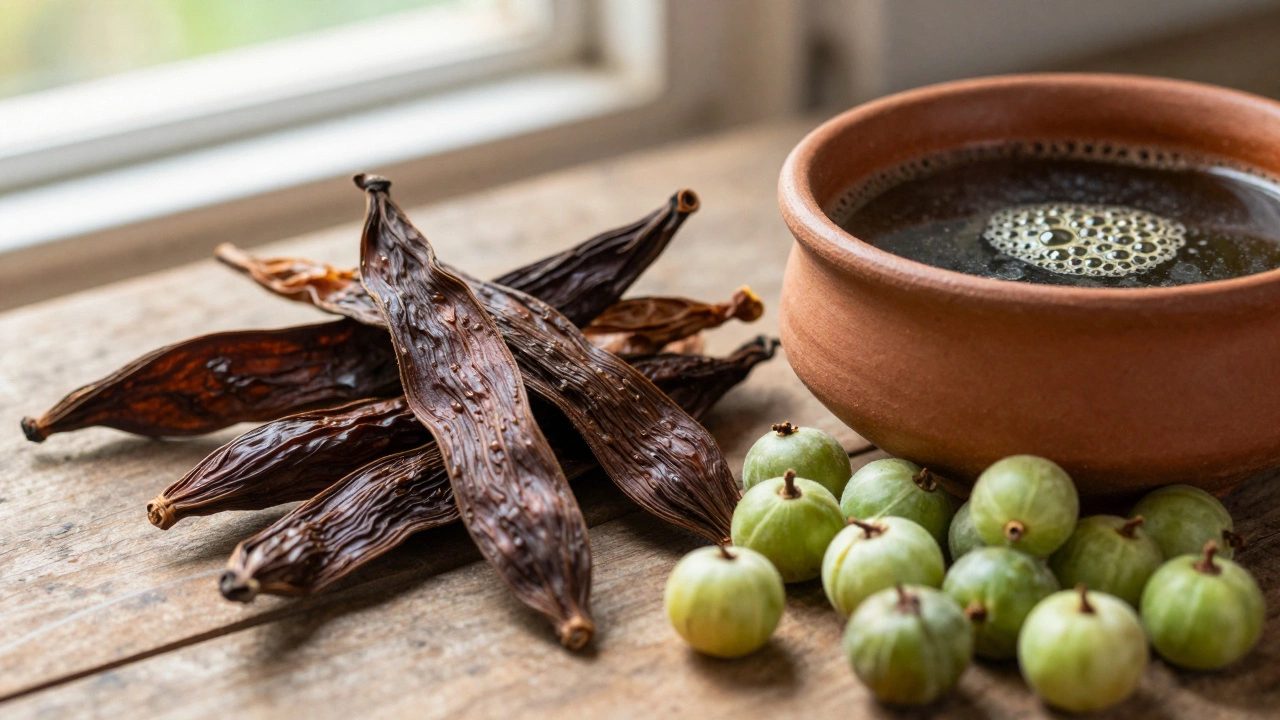
Before the world knew what a surfactant was, Indians were using plants that naturally create foam. If you walk into a traditional home in Kerala or Rajasthan, you'll likely find dried pods of Reetha is also known as Soapnut, a fruit containing natural saponins that act as a gentle cleansing agent. Unlike commercial shampoos that use harsh sulfates to strip oil, Reetha cleanses without destroying the skin's natural barrier. It's essentially a biological soap. But Reetha is usually the partner to Shikakai is a seed-bearing pod from the Acacia concinna tree, prized for its low pH and conditioning properties. While Reetha does the heavy lifting of cleaning, Shikakai acts more like a conditioner. It detangles the hair and ensures the scalp doesn't get too dry. When you boil these two together, you get a brown, bubbly liquid that removes dirt while leaving the hair's natural oils intact. You won't get the same massive amount of foam as you do with a store-bought brand, but your hair will feel significantly stronger.The Power of Amla: The Vitamin C Boost
Cleaning isn't enough; the hair needs nourishment. That's where Amla is the Indian Gooseberry, one of the richest natural sources of Vitamin C and a cornerstone of Ayurvedic hair health comes into play. Amla is rarely used alone. It's often ground into a paste or infused into the washing liquid. Why bother with it? The high concentration of antioxidants in Amla helps prevent premature greying and strengthens the hair shaft. In a typical household routine, a powder made from dried Amla is mixed with water or the Reetha-Shikakai brew. This creates a treatment that doesn't just wash away grime but actually feeds the follicles. If you've ever noticed that Indian hair has a specific 'bounce' and shine, Amla's ability to seal the hair cuticle is a big reason why.| Ingredient | Primary Role | Key Attribute | Best For |
|---|---|---|---|
| Reetha | Cleansing | Saponins | Removing oil and dirt |
| Shikakai | Conditioning | Low pH | Detangling and shine |
| Amla | Strengthening | Vitamin C | Growth and pigmentation |
The Pre-Wash Ritual: The Art of Champi
In India, the wash is only half the story. You can't talk about washing hair without talking about Champi is the traditional Indian head massage using warm oils to stimulate blood flow and nourish the scalp. Washing hair without first oiling it is considered a mistake in many households. Usually, Coconut Oil or sesame oil is warmed up and massaged deeply into the scalp. This serves two purposes. First, it loosens dead skin and pollutants. Second, it creates a protective layer. Since natural cleansers like Reetha can be quite efficient, the oil prevents the hair from becoming too dry. This ritual is often a bonding experience, with mothers massaging their children's hair, ensuring that the scalp remains hydrated and the roots are stimulated long before the water ever touches the head.Beyond the Pods: Kitchen Ingredients
When the specialized herbs aren't available, the Indian kitchen becomes a pharmacy. You'll often find Yogurt (curd) used as a natural cleanser and conditioner. Yogurt contains lactic acid, which gently exfoliates the scalp and removes buildup without the need for a chemical peel. Then there is the use of Fenugreek Seeds (Methi). These seeds are soaked overnight, ground into a paste, and applied to the hair. Fenugreek is packed with protein and nicotinic acid, which helps with dandruff and hair fall. Many people mix this paste with their Reetha wash to add a layer of protein treatment to their cleansing routine. It’s a holistic approach: cleanse with saponins, condition with yogurt, and strengthen with fenugreek.The Modern Shift: Hybrid Hair Care
Is everyone in India still boiling pods on a stove? Not exactly. In cities like Mumbai, Delhi, or Bangalore, the fast-paced life means most people use commercial shampoos. However, there's a massive trend toward "sulfate-free" and "paraben-free" products, which are essentially modern attempts to replicate the gentle nature of Shikakai and Reetha. Many modern Indians use a hybrid approach. They might use a mild shampoo for a quick mid-week wash but dedicate their Sundays to a traditional Ayurvedic mask and wash. This blend of Ayurveda-the ancient Indian system of medicine-and modern dermatology allows them to maintain the health of their hair while fitting into a corporate schedule. You'll find that even the most expensive luxury shampoos in India now list 'Amla' or 'Shikakai' as key ingredients because the efficacy of these entities is scientifically recognized.Common Pitfalls and Pro Tips for Trying This at Home
If you're thinking of swapping your shampoo for a Reetha-Shikakai brew, don't just jump in blindly. There are a few things you need to know to avoid a hair disaster:- Watch your eyes: Reetha is a natural soap. If it gets in your eyes, it stings significantly more than a modern shampoo. Lean your head back when rinsing.
- Don't overdo the Reetha: Too much Soapnut can make the hair feel a bit stiff. Always balance it with Shikakai or a bit of yogurt to maintain softness.
- Patience is key: Natural washes don't lather as much. You might feel like it's not working because there aren't bubbles everywhere, but the saponins are still cleaning your scalp.
- The Oil Balance: If you use a heavy oil massage (Champi), you may need to wash your hair twice with the natural brew to ensure all the excess oil is gone.
Can I use Shikakai and Reetha every day?
It is not recommended to wash your hair every day, whether you use natural or chemical products. Washing too frequently strips the scalp of essential oils. Most traditional routines involve washing 2-3 times a week, with heavy oiling on the off-days to keep the hair hydrated.
Does this method work for curly hair?
Yes, and it's actually often better for curly hair. Because Reetha and Shikakai are gentler than sulfates, they don't strip the moisture that curly hair desperately needs to avoid frizz. The addition of Amla and yogurt helps define curls and adds a natural shine.
Where can I find these ingredients if I don't live in India?
You can find them at Indian grocery stores, health food shops, or online marketplaces. They are usually sold as dried pods or as pre-mixed powders. If buying powder, ensure it is organic and free from added fragrances or synthetic colors.
Will using Amla change my hair color?
Amla is not a dye, but it can darken the hair slightly over long-term use. For some, it helps maintain the natural deep black or brown pigment of the hair and can slow down the appearance of grey hairs, but it won't drastically change your hair color like a chemical dye would.
Is it safe for sensitive skin?
Generally, yes, because these are plant-based. However, everyone's skin is different. It's always a good idea to do a patch test on a small area of your skin before applying a concentrated Reetha or Shikakai brew to your entire scalp to ensure you don't have an allergic reaction to the plants.
Next Steps for Your Hair Journey
If you're new to this, don't throw away all your products overnight. Start by introducing a weekly oil massage. Then, try replacing your conditioner with a yogurt mask. Once you're comfortable, experiment with a Reetha-Shikakai powder mix. If you find the process of boiling pods too tedious, look for certified organic Ayurvedic shampoo bars that combine these ingredients into a convenient form. Your hair is an investment; switching from harsh chemicals to plant-based wisdom is one of the best ways to ensure it stays healthy for decades.
Arnav Singh
I am a health expert with a focus on medicine-related topics in India. My work involves researching and writing articles that aim to inform and educate readers about health and wellness practices. I enjoy exploring the intersections of traditional and modern medicine and how they impact healthcare in the Indian context. Writing for various health magazines and platforms allows me to share my insights with a wider audience.
About
Medical Resource Center India is a comprehensive online platform dedicated to providing reliable health information and medical resources in India. Explore a wide range of articles, tips, and advice on medicine, healthcare services, and wellness. Stay informed about the latest developments in Indian medicine and access valuable insights into maintaining a healthy lifestyle. Discover expert guidance and health solutions tailored for every Indian citizen. Your go-to destination for authoritative medical knowledge in India.