Are ADHD People Neurodivergent? Understanding the Link Between ADHD and Brain Differences
Neurodiversity Comparison Tool
- Focus: Sustained attention on low-stimulation tasks
- Social Cues: Implicit understanding of norms
- Task Management: Linear, step-by-step execution
- Emotional Regulation: Gradual emotional shifts
- Focus: Interest-based nervous system; requires novelty or urgency
- Social Cues: May miss subtle cues or prefer direct communication
- Task Management: Non-linear, multi-threaded, prone to distraction
- Emotional Regulation: Rapid emotional intensity (Rejection Sensitive Dysphoria)
Select a trait to view the detailed breakdown...
Have you ever wondered if your brain works differently than everyone else’s? For millions of people diagnosed with Attention Deficit Hyperactivity Disorder (ADHD), this isn't just a philosophical question-it's a daily reality. But does having ADHD automatically make someone neurodivergent? The short answer is yes. In fact, ADHD is one of the most common examples of neurodivergence.
To understand why, we need to look past the stereotypes of fidgety children and scattered adults. We need to look at how the brain actually functions, how society defines "normal," and why recognizing ADHD as a form of neurodivergence changes everything-from self-esteem to workplace accommodations.
What Does It Mean to Be Neurodivergent?
The term neurodivergent was coined in the late 1990s by Australian sociologist Judy Singer. She argued that conditions like autism, ADHD, dyslexia, and Tourette syndrome are natural variations of the human genome, not defects to be cured. This concept sits under the broader umbrella of neurodiversity, which suggests that brains come in different shapes and sizes, much like bodies do.
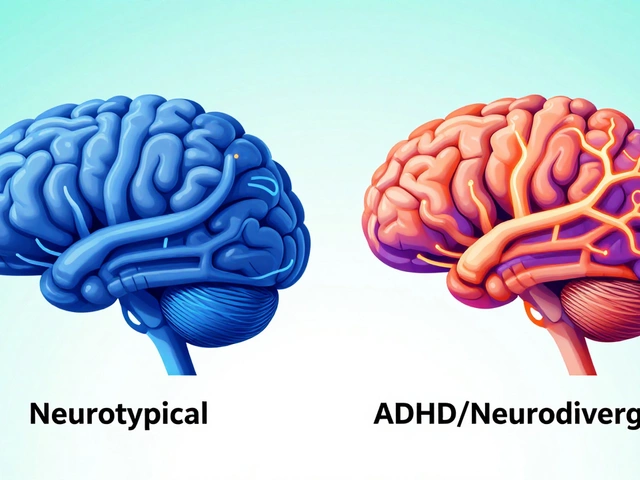
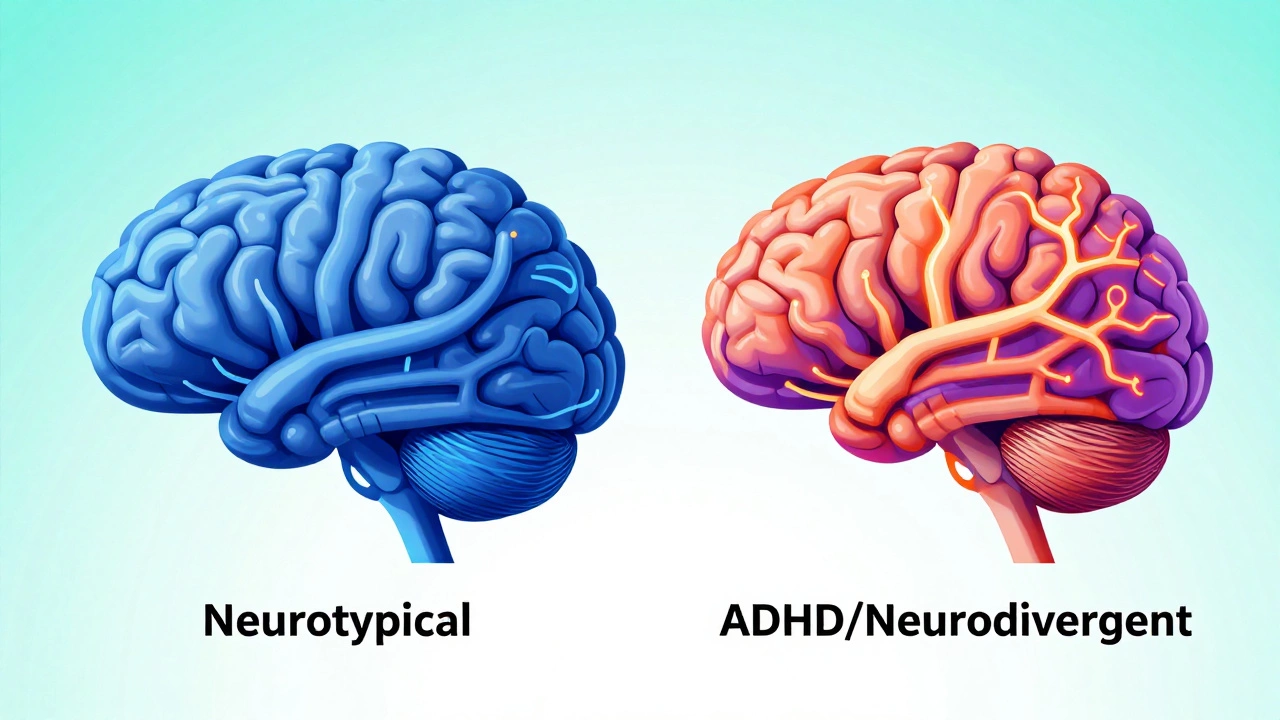
If you are neurotypical, your brain processes information in a way that aligns with societal expectations for learning, socializing, and focusing. If you are neurodivergent, your brain operates on a different operating system. It doesn’t mean it’s broken; it means it runs different software. For an ADHD brain, this often looks like heightened creativity, rapid associative thinking, and difficulty with linear, repetitive tasks.
| Trait | Neurotypical Processing | Neurodivergent (ADHD) Processing |
|---|---|---|
| Focus | Sustained attention on low-stimulation tasks | Interest-based nervous system; requires novelty or urgency |
| Social Cues | Implicit understanding of norms | May miss subtle cues or prefer direct communication |
| Task Management | Linear, step-by-step execution | Non-linear, multi-threaded, prone to distraction |
| Emotional Regulation | Gradual emotional shifts | Rapid emotional intensity (Rejection Sensitive Dysphoria) |
Why ADHD Is Considered Neurodivergent
ADHD is not a lack of intelligence or effort. It is a difference in executive function. Executive functions are the brain’s management system-responsible for planning, organizing, focusing, and regulating emotions. In a neurodivergent ADHD brain, these systems are wired differently due to variations in neurotransmitters like dopamine and norepinephrine.
Research shows that the prefrontal cortex-the part of the brain responsible for decision-making and impulse control-matures more slowly in people with ADHD. This biological difference confirms that ADHD is an inherent trait, not a behavioral choice. Therefore, fitting the definition of neurodivergence perfectly: a natural variation in how the brain develops and operates.
Consider this analogy: A neurotypical brain is like a computer running Windows, optimized for standard office software. An ADHD brain might be running Linux-powerful, flexible, and capable of incredible multitasking, but frustratingly incompatible with standard plug-and-play peripherals. Neither is "better"; they just require different approaches to achieve the same goals.
The Spectrum of Neurodivergence
It is important to note that neurodivergence is not a binary switch. It is a spectrum. Some people have mild ADHD traits, while others experience severe impairment without support. Furthermore, many neurodivergent individuals have overlapping conditions. This is known as comorbidity.
- Autism and ADHD: Historically, these were seen as mutually exclusive. Today, we know they frequently co-occur. Both involve sensory processing differences and social communication nuances.
- Dyslexia and ADHD: Roughly 30% of people with dyslexia also have ADHD. Both affect how information is processed and retained.
- Anxiety and ADHD: Chronic stress from managing an unaccommodated ADHD brain often leads to secondary anxiety disorders.
Understanding these overlaps helps us see that neurodivergence is a complex ecosystem. When you identify as neurodivergent because of ADHD, you are acknowledging a specific neurological profile that interacts with other potential traits.

Moving From Pathology to Identity
For decades, the medical model viewed ADHD solely through a lens of pathology. The focus was on deficits: what the person couldn’t do. The neurodiversity paradigm shifts this to a strengths-based model. It asks: What can this brain do uniquely well?
People with ADHD often excel in crisis management, creative problem-solving, and hyperfocus. When interested in a topic, an ADHD individual can enter a state of deep concentration that rivals any neurotypical peer. This ability to dive deep into passions is a superpower in fields like entrepreneurship, art, and emergency response.
However, embracing neurodivergence does not mean ignoring challenges. It means addressing them with appropriate tools rather than shame. Therapy for ADHD should not aim to "cure" the person but to equip them with strategies to navigate a world built for neurotypical brains. Cognitive Behavioral Therapy (CBT) adapted for ADHD, for example, focuses on practical skills like time-blocking and emotional regulation, rather than challenging core beliefs about worthiness.
Navigating a Neurotypical World
Living with ADHD in a society designed for neurotypical minds can be exhausting. Schools demand quiet sitting. Offices reward linear task completion. Social events rely on subtle cues. For a neurodivergent person, this constant mismatch leads to burnout, often called "masking."
Masking involves consciously suppressing natural behaviors to appear normal. An ADHDer might force themselves to sit still, hide their fidgeting, or rehearse conversations beforehand. While masking can help avoid negative judgment, it drains mental energy and increases the risk of depression and anxiety.
The goal of neurodiversity acceptance is to reduce the need for masking. This happens through:
- Self-Acceptance: Recognizing that your struggles are not moral failures but neurological differences.
- Environmental Adjustments: Using noise-canceling headphones, standing desks, or visual timers to work with your brain, not against it.
- Advocacy: Educating employers and educators about reasonable accommodations, such as flexible deadlines or written instructions.
Common Misconceptions About ADHD and Neurodivergence
Despite growing awareness, myths persist. Let’s clear up some of the most damaging ones.
Myth 1: Only boys have ADHD. Fact: Girls and women often present with inattentive symptoms rather than hyperactive ones. They are frequently misdiagnosed with anxiety or mood disorders until adulthood.
Myth 2: ADHD is just laziness. Fact: Laziness implies a choice. ADHD involves a physiological inability to initiate tasks due to low dopamine levels. It is an executive dysfunction, not a character flaw.
Myth 3: Neurodivergent people don’t need treatment. Fact: Acceptance does not mean neglect. Medication, therapy, and coaching are valid tools to manage symptoms and improve quality of life. Treating ADHD is like wearing glasses for poor vision-it corrects a deficit to allow full participation in life.
How to Support Neurodivergent Loved Ones
If you are neurotypical and love someone with ADHD, your approach matters. Instead of criticizing forgetfulness or disorganization, try to understand the underlying mechanism. Ask yourself: Is this a capability issue or a consistency issue?
Practical support includes:
- Externalizing Memory: Help create systems where tasks are visible (whiteboards, apps) rather than relying on internal memory.
- Body Doubling: Simply being present while they work can help them stay focused. You don’t need to help; just exist in the space.
- Patient Communication: Give them time to process questions. Avoid interrupting, as this can derail their train of thought completely.
Remember, the relationship between ADHD and neurodivergence is foundational. By viewing ADHD through the lens of neurodiversity, we move from judgment to understanding. We stop asking "What is wrong with you?" and start asking "What do you need to thrive?" This shift is not just semantic; it is transformative for mental health and overall well-being.
Is ADHD considered a disability?
Yes, in many countries including the US and UK, ADHD is recognized as a disability under laws like the Americans with Disabilities Act (ADA) and the Equality Act 2010. It qualifies for workplace and educational accommodations when it significantly impacts major life activities.
Can you be neurodivergent without a diagnosis?
Yes. Neurodivergence is a neurological state, not a legal status. Many people identify as neurodivergent based on self-observation and community validation, even without a formal clinical diagnosis. However, a diagnosis is often required for official accommodations.
What is the difference between neurodiversity and neurodivergence?
Neurodiversity is the concept that brain differences are natural variations in the human population. Neurodivergence refers to the individual experience of having a brain that functions differently from the dominant cultural norm (neurotypical). One is the theory; the other is the identity.
Does medication change your neurodivergence?
No. Medication helps regulate neurotransmitter levels to improve executive function, but it does not change your fundamental personality or cognitive style. You remain neurodivergent; you just have better access to your own abilities.
Are all people with ADHD neurodivergent?
Yes. Since ADHD is a developmental condition affecting brain structure and function, it falls squarely within the definition of neurodivergence. It represents a distinct way of processing information and interacting with the world.