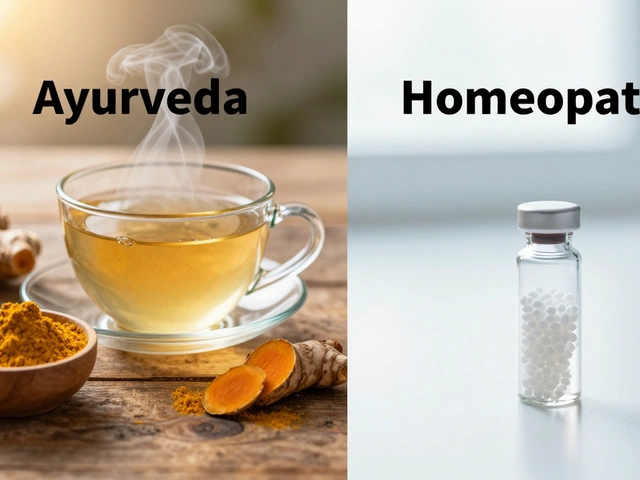
Homeopathy vs Ayurveda: Which Holistic Path is Right for You?
The Core Philosophy: Energy vs. Balance
To understand these two, we have to start with their DNA. Ayurveda is a traditional system of medicine originating in India over 3,000 years ago, focusing on the balance between the body, mind, and spirit. It treats health as a state of equilibrium. If you're sick, Ayurveda says you're out of balance. The goal is to get you back to your natural state using diet, herbal compounds, and lifestyle changes.
On the other hand, Homeopathy is a system of alternative medicine developed in Germany by Samuel Hahnemann in the late 18th century. It doesn't focus on biological balance as much as it does on a specific biological trigger. It operates on the principle of 'like cures like.' This means a substance that causes symptoms in a healthy person can, in a highly diluted form, treat similar symptoms in a sick person.
Think of it this way: Ayurveda is like a gardener tending to the whole ecosystem of a backyard to make sure the soil is rich and the water is flowing. Homeopathy is more like a precision tool, looking for the exact trigger that caused a weed to grow and using a mirrored version of that trigger to stop it.
How Ayurveda Views Your Body: The Doshas
In Ayurveda, you aren't just a patient; you are a unique combination of three biological energies called Doshas. These are Vata (air and space), Pitta (fire and water), and Kapha (water and earth). Everyone has all three, but one or two usually dominate. If you're a Pitta type, you might have a fiery temper and a strong metabolism. If you're Vata, you might struggle with anxiety and dry skin. When these energies get skewed-say, too much Pitta leading to inflammation-you get sick.
Treatment in Ayurveda is comprehensive. It isn't just about the medicine; it's about homeopathy alternatives that involve Panchakarma, a five-step detoxification process that includes oil massages and dietary fasting. The focus is on the Agni (digestive fire). If your Agni is weak, you create toxins called Ama, which Ayurveda believes are the root of most chronic diseases.
The Homeopathic Approach: Potentization and Dilution
Homeopathy takes a completely different route. It doesn't care about your "type" in the same way. Instead, it looks at the totality of your symptoms. A homeopathic doctor might spend an hour asking you if you prefer the window open or closed, or if you crave salt or sugar. They are looking for a match between your specific experience of a disease and the properties of a remedy.
The most controversial part of homeopathy is Potentization. This is the process of serial dilution. A substance is dissolved in alcohol or distilled water and shaken vigorously. This is repeated until almost none of the original molecules remain. Homeopaths believe that the water "remembers" the essence of the substance. While this clashes with modern chemistry, practitioners argue that these highly diluted doses stimulate the body's own healing response without causing side effects.
| Feature | Ayurveda | Homeopathy |
|---|---|---|
| Origin | Ancient India | 18th Century Germany |
| Key Principle | Balance of Doshas | Like Cures Like |
| Primary Tools | Herbs, Diet, Yoga, Oil | Highly Diluted Pellets/Liquids |
| Approach | Holistic Life System | Symptom-Specific Matching |
| Detox focus | High (Panchakarma) | Low (Stimulates Vital Force) |

Treatment Methods: What Actually Happens?
If you go for an Ayurvedic treatment, prepare for a lifestyle overhaul. You might be told to wake up at 5 AM, eat warm foods, and avoid cold drinks. You'll likely use Ashwagandha or Turmeric-plants with tangible chemical properties-to manage stress or inflammation. It's a biological approach that uses the chemistry of nature to nudge the body back into alignment.
Homeopathy is far less intrusive regarding your daily routine. You don't usually have to change your diet or exercise habits, although some practitioners suggest avoiding strong mint or coffee which they believe can interfere with the remedy. You get a small dose of a remedy-perhaps based on Arnica for bruising or Belladonna for fever-and the remedy does the work by triggering your "vital force" to heal itself.
Which One Should You Choose?
Choosing between them depends on what you're looking for. If you feel your whole life is out of sync-you're tired, your digestion is a mess, and you want a complete roadmap for healthy living-Ayurveda is the stronger choice. It provides a framework for how to eat, sleep, and think based on your physical constitution.
If you have a very specific, nagging symptom that conventional medicine hasn't solved, or if you are highly sensitive to chemicals and want a treatment with virtually zero risk of toxicity, homeopathy might be more appealing. It's a targeted approach that focuses on the individual's subjective experience of an illness.
Some people even use both. They might use Ayurvedic diet and yoga for long-term maintenance and a homeopathic remedy for an acute allergic reaction. Because homeopathy is so diluted, it rarely interacts with the herbal compounds used in Ayurveda, making them relatively compatible.

Potential Pitfalls and Safety
Neither system should replace emergency medical care. If you're having a heart attack, you don't want a Dosha analysis; you want a surgeon. That said, both have risks. Ayurvedic supplements, if not sourced from reputable suppliers, can sometimes be contaminated with heavy metals like lead or mercury. Always check the source of your herbs.
Homeopathy's biggest risk is "treatment delay." Because the remedies are so gentle, some people use them for serious infections or chronic diseases that require aggressive medical intervention. The danger isn't the sugar pill itself, but the time lost by not using evidence-based medicine for critical conditions.
Is Ayurveda better than Homeopathy for chronic pain?
It depends on the cause. Ayurveda is often better for systemic chronic pain (like arthritis) because it uses anti-inflammatory herbs and physical therapies like oil massage. Homeopathy is better if the pain is linked to a specific emotional trauma or a very unique set of symptoms that don't fit a standard diagnosis.
Can I take Ayurvedic herbs and homeopathic pills together?
Generally, yes. Homeopathic remedies are so dilute that they don't typically interfere with the chemical actions of Ayurvedic herbs. However, it's always best to tell both practitioners what you're taking so they can track your progress accurately.
Do these treatments have scientific backing?
Ayurveda has more "material" evidence; many of its herbs (like Turmeric) are studied in labs for their active compounds. Homeopathy is more controversial in the scientific community because the extreme dilutions mean there is no active ingredient left, leading critics to attribute its success to the placebo effect.
How long does it take to see results?
Ayurveda is a long game. It's about lifestyle shifts, so you might feel a difference in energy in a few weeks, but deep healing takes months. Homeopathy can be very fast for acute issues (like a sudden cold) but may take longer for deep-seated emotional or constitutional problems.
Are these treatments expensive?
Ayurveda can be expensive if you undergo full Panchakarma retreats or buy high-end organic supplements. Homeopathy is generally more affordable since the remedies are simple dilutions, and the cost is primarily the practitioner's consultation fee.
Next Steps for Your Health Journey
If you're still unsure, start by tracking your symptoms. Do you feel "off" in a general way (bloating, brain fog, mood swings)? That's an Ayurvedic starting point. Do you have a specific, weird symptom that no one can explain? That's a homeopathic lead. Regardless of the path, keep your primary care physician in the loop. The best results usually happen when you blend the wisdom of traditional systems with the safety of modern diagnostics.