What Is 90 Percent of All Cancers? Understanding Carcinomas
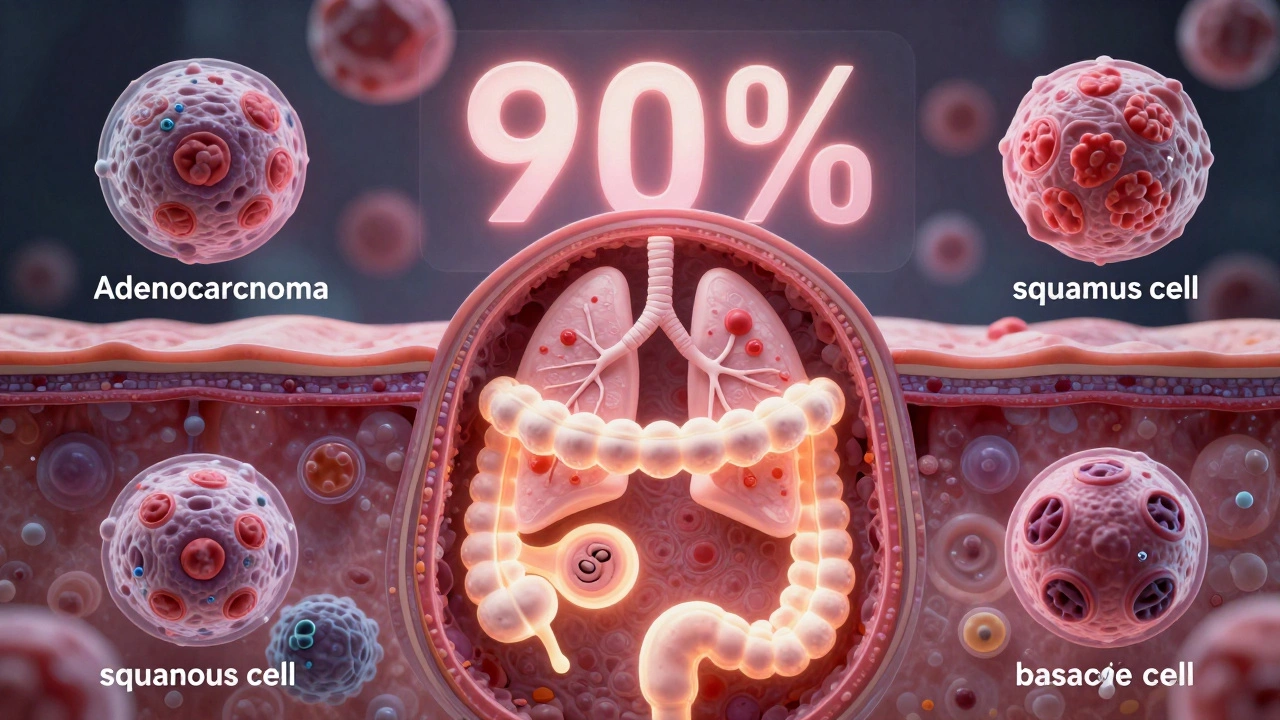
When people talk about cancer, they often think of it as one big disease. But cancer isn’t a single thing. It’s more than 200 different diseases, each with its own behavior, treatment, and origin. And here’s the key fact: carcinomas make up about 90 percent of all cancers in humans. That’s not a guess. It’s based on decades of global pathology data from hospitals, cancer registries, and research institutions like the World Health Organization and the American Cancer Society.
What Exactly Is a Carcinoma?
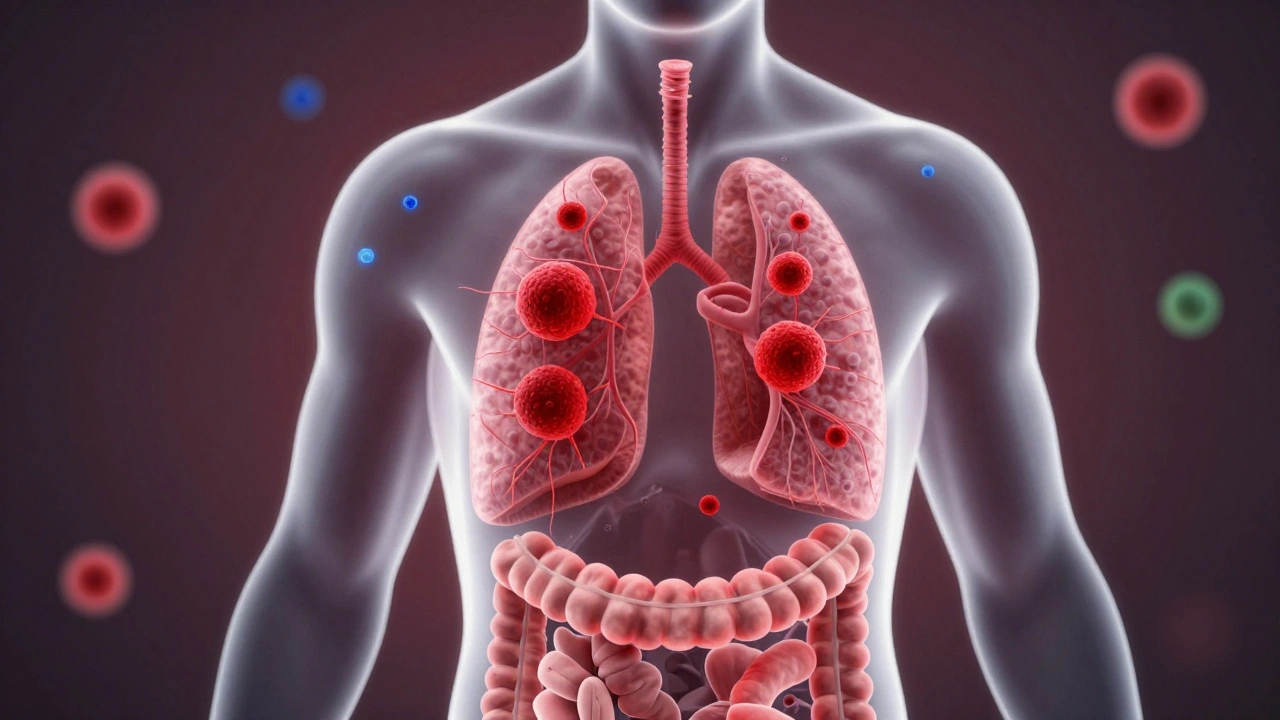
A carcinoma is a cancer that starts in the epithelial cells. These are the cells that line the surfaces of your body - your skin, the inside of your lungs, the lining of your colon, your breast ducts, your prostate, your pancreas, and even your mouth. Think of epithelial cells as the body’s protective layer. They’re everywhere you have a surface that touches the outside world or an internal cavity.
When these cells start dividing uncontrollably due to DNA damage - from smoking, UV light, viruses, or random errors - they can form tumors. Because epithelial cells are so common, it’s no surprise that cancers starting here are the most common. Carcinomas include the cancers most people know: lung cancer, breast cancer, colon cancer, prostate cancer, skin cancer (melanoma and non-melanoma), and pancreatic cancer.
Why Do Carcinomas Dominate Cancer Statistics?
It’s not just about how many epithelial cells you have - though you have trillions of them. It’s about exposure. Your skin is constantly exposed to sunlight. Your lungs breathe in air full of pollutants. Your digestive tract processes food that may contain carcinogens. Your breasts and prostate are influenced by hormones over decades. These tissues are under constant stress.
Compare that to sarcomas, which start in bone or muscle. Or leukemias, which start in blood-forming cells. These are rarer because the cells involved are fewer in number or less exposed to everyday damage. Epithelial cells, on the other hand, are always working, always renewing, always at risk.
According to the National Cancer Institute, in the United States alone, carcinomas account for over 85 percent of all new cancer cases each year. When you add in global data from Europe, Asia, and Latin America, the number climbs to 90 percent. That’s why oncologists focus so much of their research on epithelial cancers - they affect the most people.
Common Types of Carcinomas You Should Know
Not all carcinomas are the same. They’re broken down by where they start and how they look under a microscope. Here are the most common ones:
- Adenocarcinoma: Starts in glandular tissue. This includes most breast cancers, prostate cancers, lung cancers (especially in non-smokers), and colorectal cancers.
- Squamous cell carcinoma: Begins in flat, scale-like epithelial cells. Common in the skin, lungs, esophagus, and head and neck areas.
- Basal cell carcinoma: The most common skin cancer. Slow-growing and rarely spreads, but very common due to sun exposure.
- Transitional cell carcinoma: Starts in the lining of the bladder and urinary tract.
- Renal cell carcinoma: The main type of kidney cancer.
Each type has different risk factors, symptoms, and treatments. But they all share one thing: they began in epithelial tissue. That’s why knowing the origin matters - it guides everything from biopsy interpretation to drug selection.
How Carcinomas Are Diagnosed and Treated
Because carcinomas form solid tumors, they’re often found through imaging - mammograms, CT scans, colonoscopies, or skin checks. A biopsy is always needed to confirm. Pathologists look at the tissue under a microscope to see if the cells look abnormal and whether they’ve invaded nearby tissue - a sign of cancer.
Treatment usually starts with surgery to remove the tumor. Then comes radiation, chemotherapy, or targeted therapy, depending on the type and stage. For example, early-stage breast adenocarcinoma might only need surgery and hormone therapy. Advanced lung adenocarcinoma might need immunotherapy or a combination of targeted drugs based on genetic mutations like EGFR or ALK.
One major shift in the last decade is the move toward molecular profiling. Instead of just saying “lung cancer,” doctors now test for specific gene changes. This helps pick the right drug. A patient with metastatic adenocarcinoma of the lung who has an EGFR mutation might respond dramatically to osimertinib - a drug that works only for that specific change. That’s precision medicine, and it’s changing outcomes for many carcinoma patients.
Why Other Cancer Types Are Less Common
Just to put it in perspective, here’s how other cancers stack up:
- Sarcomas (bone and soft tissue): Less than 1 percent of all cancers.
- Leukemias (blood cancers): Around 4 percent.
- Lymphomas (lymphatic system): About 5 percent.
- Central nervous system cancers (brain and spinal cord): Less than 2 percent.
These are serious diseases - but they’re rare compared to carcinomas. That’s why public health campaigns focus on screening for breast, colon, lung, and skin cancer. Those are the ones that will affect the most people. Pap smears, colonoscopies, low-dose CT scans for smokers, and regular skin checks are all aimed at catching carcinomas early.
Can You Reduce Your Risk of Carcinoma?
Yes - and it’s not just about avoiding smoking or sunscreen. Here’s what actually works, based on large population studies:
- Don’t smoke. Smoking causes about 30 percent of all cancer deaths - mostly carcinomas like lung, throat, bladder, and pancreatic.
- Limit alcohol. Even moderate drinking raises the risk of breast and liver carcinomas.
- Eat more fiber and vegetables. Diets high in fruits, whole grains, and legumes lower colon cancer risk.
- Get screened. Colonoscopies can prevent colon cancer by removing polyps before they turn cancerous. Mammograms catch breast cancer early. Skin checks find melanoma before it spreads.
- Protect your skin. UV radiation is the main cause of basal and squamous cell skin cancers. Daily sunscreen, hats, and shade matter.
These aren’t just general tips. They’re backed by data from the World Cancer Research Fund and the UK’s NHS. For example, the NHS estimates that if everyone in the UK followed these guidelines, over 40 percent of cancer cases could be prevented. Most of those would be carcinomas.
What’s Next for Carcinoma Research?
Scientists are now looking at how the body’s immune system interacts with epithelial tumors. Immunotherapy drugs like pembrolizumab and nivolumab have helped some patients with advanced lung and skin carcinomas live years longer than before. Trials are underway to use these drugs earlier - even after surgery - to stop recurrence.
Another big area is liquid biopsies. Instead of cutting into tissue, doctors are testing blood for tumor DNA. This could one day replace some traditional biopsies and help track how a cancer is responding to treatment in real time.
And then there’s prevention. Researchers are developing vaccines for cancers caused by viruses - like HPV, which causes cervical and throat carcinomas. The HPV vaccine already cuts cervical cancer rates by up to 90 percent in vaccinated populations.
Final Thought: It’s Not Just a Number
Ninety percent sounds abstract. But behind that number are millions of people - your neighbors, your friends, your family. Understanding that most cancers start in epithelial tissue isn’t just academic. It’s practical. It tells you where to focus your attention: on screening, on lifestyle, on early detection. It tells doctors where to direct resources. And it reminds us that cancer isn’t one enemy. It’s many - but most of them come from the same place.
If you’re over 45, get your colon check. If you smoke, quit. If you’re in the sun often, wear protection. These aren’t just good habits. They’re the best defense against the most common form of cancer we know.
Is carcinoma the same as cancer?
No. Carcinoma is a type of cancer - specifically, the most common one. Cancer is the broad term for any disease where cells divide uncontrollably. Carcinoma refers only to cancers that begin in epithelial cells, which line organs and surfaces in the body. Other types of cancer, like leukemia or lymphoma, are not carcinomas.
Are all skin cancers carcinomas?
Most are. Basal cell carcinoma and squamous cell carcinoma are both carcinomas because they start in the skin’s epithelial layer. Melanoma is different - it starts in melanocytes, which are pigment cells, not epithelial cells. So melanoma is a cancer, but not a carcinoma. It’s classified as a melanocytic tumor.
Can a carcinoma spread to other parts of the body?
Yes. That’s what makes it dangerous. Carcinomas can invade nearby tissue and then spread (metastasize) through the bloodstream or lymph system to distant organs like the liver, lungs, bones, or brain. Once it spreads, treatment becomes more complex. Early detection is critical to stopping this process.
Why do doctors test for gene mutations in carcinomas?
Because not all carcinomas are the same. Two people with lung adenocarcinoma might have completely different mutations - one might have EGFR, another ALK. Targeted drugs work only for specific mutations. Testing helps match patients to the most effective treatment and avoids giving drugs that won’t work.
Is carcinoma more common in older people?
Yes. The risk of most carcinomas increases with age. That’s because DNA damage builds up over time, and the body’s ability to repair it declines. About 70 percent of all carcinoma diagnoses occur in people over 65. But some, like certain skin cancers and thyroid cancers, are rising in younger adults too, likely due to environmental and lifestyle factors.
Knowing that 90 percent of cancers are carcinomas doesn’t make the diagnosis easier - but it does make prevention and early detection more focused. It’s not about fearing cancer. It’s about understanding where it comes from - and how to stop it before it starts.