
What Are the Top 3 Survivable Cancers? Survival Rates and What They Mean
Cancer Survival Rate Calculator
Calculate Your Survival Outlook
Learn how early detection affects survival rates for common cancers with high survival rates.
Select options to see your survival rate.
When someone hears the word "cancer," fear often comes first. But not all cancers are the same. Some are aggressive and hard to treat. Others, if caught early, have survival rates so high they feel more like chronic conditions than life-threatening diseases. The truth is, millions of people live for decades after a cancer diagnosis - and three types stand out for their unusually high survival rates: breast cancer, prostate cancer, and thyroid cancer.
Why Survival Rates Matter More Than You Think
Survival rate doesn’t mean you’ll live forever. It’s a statistical snapshot - usually given as a 5-year survival rate - showing how many people are still alive five years after diagnosis. It doesn’t mean the cancer is gone, just that it’s under control. For these three cancers, the 5-year survival rate is over 90% in many countries, including the UK and the US. That’s higher than the survival rate for many common infections or even heart attacks.
What makes these cancers different? It’s not magic. It’s early detection, slow growth, and treatments that work. Unlike pancreatic or lung cancer, which often spread before symptoms appear, these cancers can be found early - sometimes even before they cause pain.
1. Breast Cancer: The Most Common, But Often Highly Treatable
One in eight women in the UK will be diagnosed with breast cancer in their lifetime. But here’s the twist: if it’s caught at stage one, the 5-year survival rate is nearly 100%. That’s not a guess - it’s data from Cancer Research UK and the Office for National Statistics.
Why is it so survivable? First, screening. Mammograms catch tumours before they spread. Second, treatment has improved dramatically. Hormone therapies like tamoxifen, targeted drugs like trastuzumab (Herceptin), and less invasive surgeries mean many women go on to live full lives. Even in stage three, survival rates hover around 70% - far higher than most other solid tumours.
Men get breast cancer too, though it’s rare. Their survival rates are similar if caught early. The key takeaway? Don’t ignore lumps, changes in nipple shape, or unusual pain. Get checked. Early detection is what turns a scary diagnosis into a manageable one.
2. Prostate Cancer: Slow-Moving, But Still Dangerous If Ignored
Prostate cancer is the most common cancer in men in the UK. Over 50,000 new cases are diagnosed each year. But here’s what most people don’t know: nearly 95% of men diagnosed with prostate cancer live at least five years. Many live 10, 15, or 20 years after diagnosis.
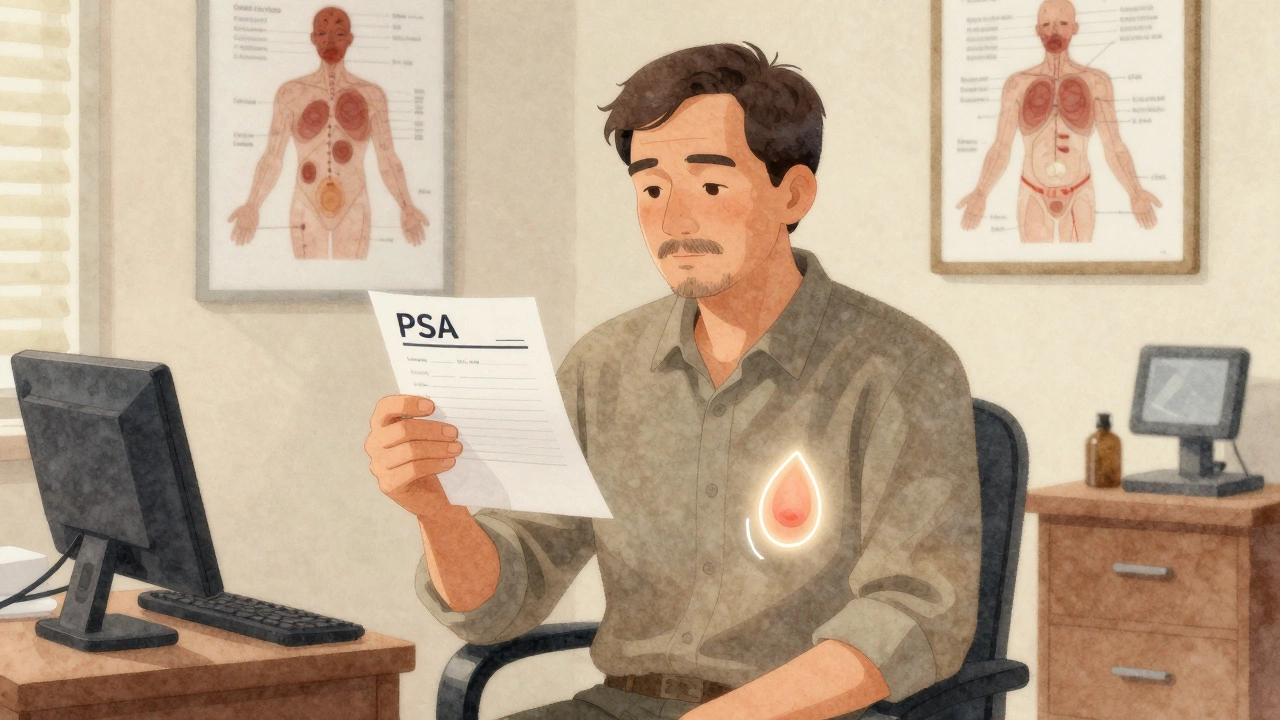
Why? Because prostate cancer often grows slowly. Some men live their whole lives with it without ever needing treatment. Doctors now use active surveillance - regular blood tests (PSA), MRIs, and biopsies - to watch the cancer instead of jumping straight to surgery or radiation.
That’s not to say it’s harmless. Aggressive forms exist, and they can spread to bones and lymph nodes. But those are the exception. Most prostate cancers are low-grade and respond well to treatment. The problem isn’t the cancer itself - it’s the fear that leads some men to avoid testing. A simple PSA blood test and digital rectal exam can catch it early. Don’t skip your check-ups just because you feel fine.
3. Thyroid Cancer: Small Gland, Big Survival Odds
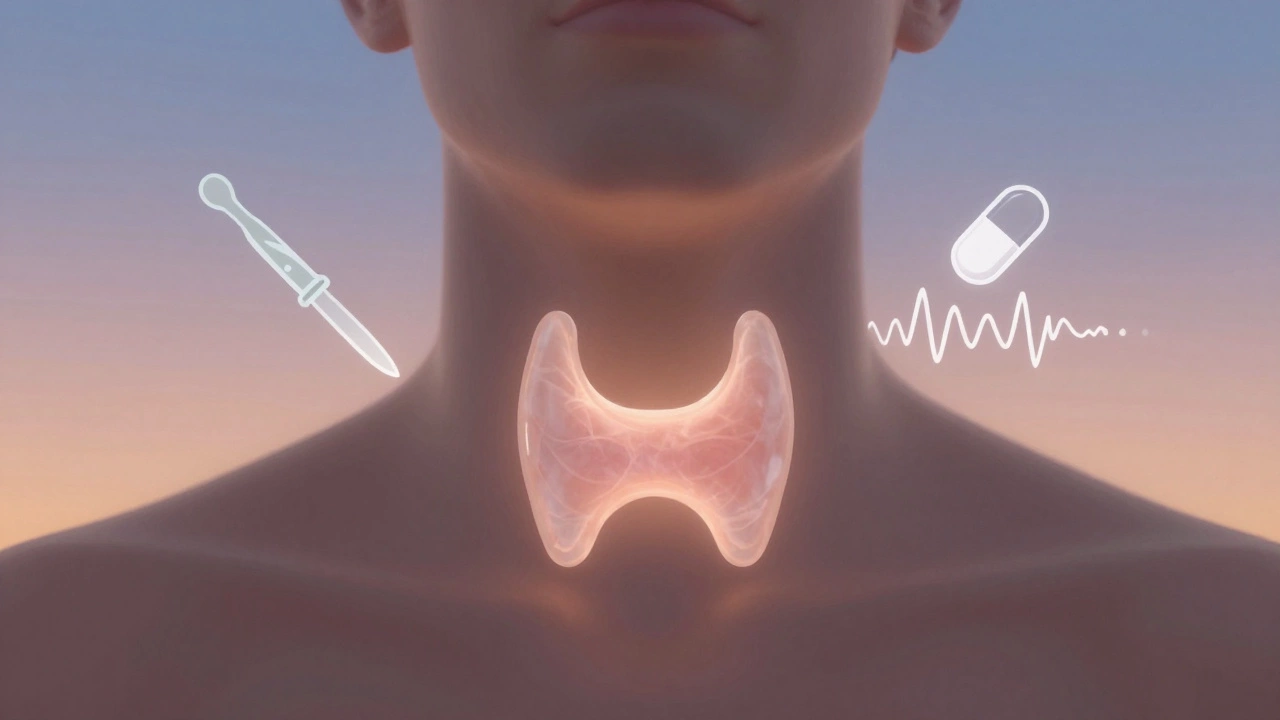
Thyroid cancer might sound obscure, but it’s one of the most survivable cancers you’ve never heard of. The 5-year survival rate? Over 98% for the most common type, papillary thyroid cancer. Even in advanced cases, survival stays above 80%.
What makes it so treatable? The thyroid is small and easy to examine. Most tumours are found during routine check-ups or when someone notices a lump in their neck. Surgery to remove the thyroid is highly effective. After surgery, patients take a daily hormone pill to replace what the thyroid used to do. Radiation is rarely needed.
Unlike other cancers, thyroid cancer doesn’t usually come back after treatment. Recurrence is possible, but it’s often slow and still treatable. The biggest risk? Not getting it checked. Many people ignore a neck lump, thinking it’s just a swollen gland. If you’ve had a persistent lump, hoarseness, or trouble swallowing for more than two weeks - get it looked at.
What These Cancers Have in Common
These three cancers share three key traits:
- They grow slowly. Unlike lung or liver cancer, which can spread in months, these cancers often take years to become dangerous.
- They’re detectable early. Screening tools exist - mammograms, PSA tests, neck exams - and they work.
- Treatments are precise and effective. Surgery, radiation, hormone therapy, and targeted drugs have high success rates with fewer side effects than in the past.
That’s not to say surviving cancer is easy. Treatment is hard. Recovery takes time. But for these cancers, survival isn’t a miracle - it’s the norm.
What Doesn’t Make the List - And Why
Some cancers, like melanoma or testicular cancer, also have high survival rates. But they’re less common. Others, like ovarian or pancreatic cancer, have poor survival rates because they’re rarely found early. No screening test exists for them. Symptoms appear only after the cancer has spread.
That’s why early detection matters more than the type of cancer. A slow-growing cancer caught early has a better chance than a fast one caught late. That’s why knowing your body and getting regular check-ups is the best weapon you have.
What You Can Do Right Now
Survival isn’t just about luck. It’s about action.
- If you’re a woman over 50: book your mammogram. Don’t wait for symptoms.
- If you’re a man over 50: ask your doctor about PSA testing. Especially if you have a family history.
- If you notice a lump in your neck, under your arm, or anywhere unusual: get it checked - even if it’s painless.
- If you’ve had cancer before: stick to follow-up appointments. Recurrence is most likely in the first five years.
Survival rates are improving every year. New drugs, better imaging, and smarter screening mean more people are living longer - and better - after diagnosis. The message isn’t "cancer isn’t serious." It’s "cancer doesn’t have to be a death sentence."
Can you survive cancer without treatment?
In rare cases, yes - especially with slow-growing cancers like some types of prostate or thyroid cancer. But this isn’t something to rely on. Most cancers will progress without treatment. What looks like spontaneous remission is often just the cancer growing so slowly that it doesn’t cause harm in a person’s lifetime. Medical supervision is still essential.
Are survival rates the same for everyone?
No. Survival rates are averages based on large groups. They don’t predict your outcome. Age, overall health, cancer stage, genetics, access to care, and even where you live can affect your chances. A 95% survival rate means most people live five years - but some won’t. It’s a guide, not a guarantee.
Does early detection really make that much difference?
Absolutely. For breast cancer, stage one has a 99% 5-year survival rate. Stage four drops to 27%. That’s a 72-percentage-point difference. Early detection doesn’t just improve survival - it means less aggressive treatment, fewer side effects, and better quality of life.
Can lifestyle changes improve survival?
Yes. Studies show that people who stay physically active, eat a balanced diet, avoid smoking, and limit alcohol have better outcomes after cancer treatment. Exercise reduces inflammation, helps manage treatment side effects, and lowers the risk of recurrence. It’s not a cure - but it’s one of the most powerful tools you have.
Why aren’t there screening tests for all cancers?
Because not all cancers are easy to detect before they spread. Tests need to be accurate, affordable, and safe. A test that gives too many false positives can cause unnecessary stress and procedures. That’s why screening only exists for cancers where the benefit clearly outweighs the risk - like breast, cervical, and colorectal cancer. Research is ongoing for others.
Final Thought: Knowledge Is Your Best Defense
Knowing which cancers are survivable isn’t about feeling safe. It’s about being smart. It’s about understanding that cancer isn’t one disease - it’s hundreds. And some of them, if you act early, are far more manageable than you think. Don’t wait for symptoms. Don’t ignore check-ups. Your body is giving you signals. Listen to them.