What Are the Eating Times for Ayurveda? A Practical Guide to Meal Timing for Better Digestion
Ayurvedic Meal Timing Calculator
Find Your Next Recommended Meal Time
Based on Ayurvedic principles, your body's digestive fire (agni) is strongest during specific time windows. Enter your current time to see your next optimal meal time.
Your Next Recommended Meal
-
Why: This window aligns with your body's dosha cycle when your digestive fire is strongest.
Most people eat when they’re hungry or when it’s convenient. But in Ayurveda, timing your meals isn’t about hunger-it’s about rhythm. Your body runs on natural cycles, and eating at the wrong times can disrupt digestion, energy, and even sleep. If you’ve tried cutting out sugar or counting calories and still feel sluggish, the problem might not be what you eat-but when.
Why Timing Matters More Than What You Eat
Ayurveda doesn’t just tell you to eat vegetables or avoid dairy. It tells you when to eat them. The reason? Your digestive fire, called agni, rises and falls throughout the day. When agni is strong, food breaks down cleanly. When it’s weak, you get bloating, gas, or fatigue-even with healthy meals.
Think of your body like a furnace. Pouring wood into it at midnight won’t make it burn hotter. It’ll smolder. Same with food. Eating late at night doesn’t just add calories-it overwhelms a system that’s winding down.
The Three Doshas and Your Daily Digestive Rhythm
Ayurveda divides the day into three main phases, each ruled by one of the three doshas: Kapha, Pitta, and Vata. Each dosha governs different bodily functions-and your digestion changes with them.
- Kapha time (6 AM - 10 AM and 6 PM - 10 PM): This is when your body is slow, heavy, and sticky. Digestion is weakest during these hours. Eating large meals now leads to mucus buildup, weight gain, and lethargy.
- Pitta time (10 AM - 2 PM and 10 PM - 2 AM): This is your body’s peak digestion window. Pitta governs metabolism, enzymes, and acid production. Your stomach is strongest between 10 AM and 2 PM. That’s when you should eat your biggest meal.
- Vata time (2 PM - 6 PM and 2 AM - 6 AM): This is when energy shifts. Digestion slows, but the body cleanses and repairs. Light, warm meals work best here.
The Ideal Ayurvedic Meal Schedule
Here’s how to structure your day based on your body’s natural rhythm-not your calendar.
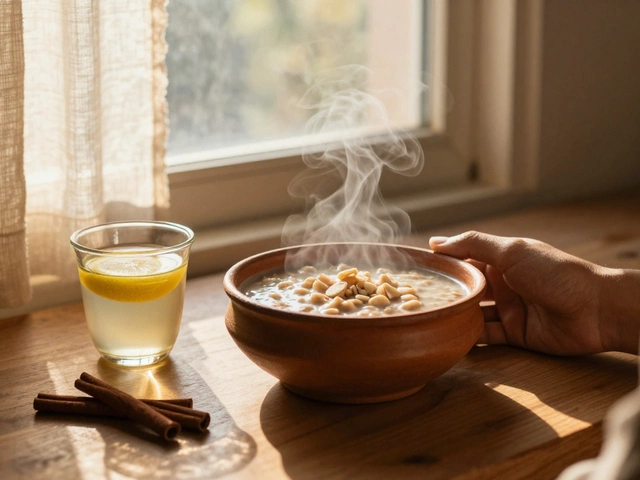
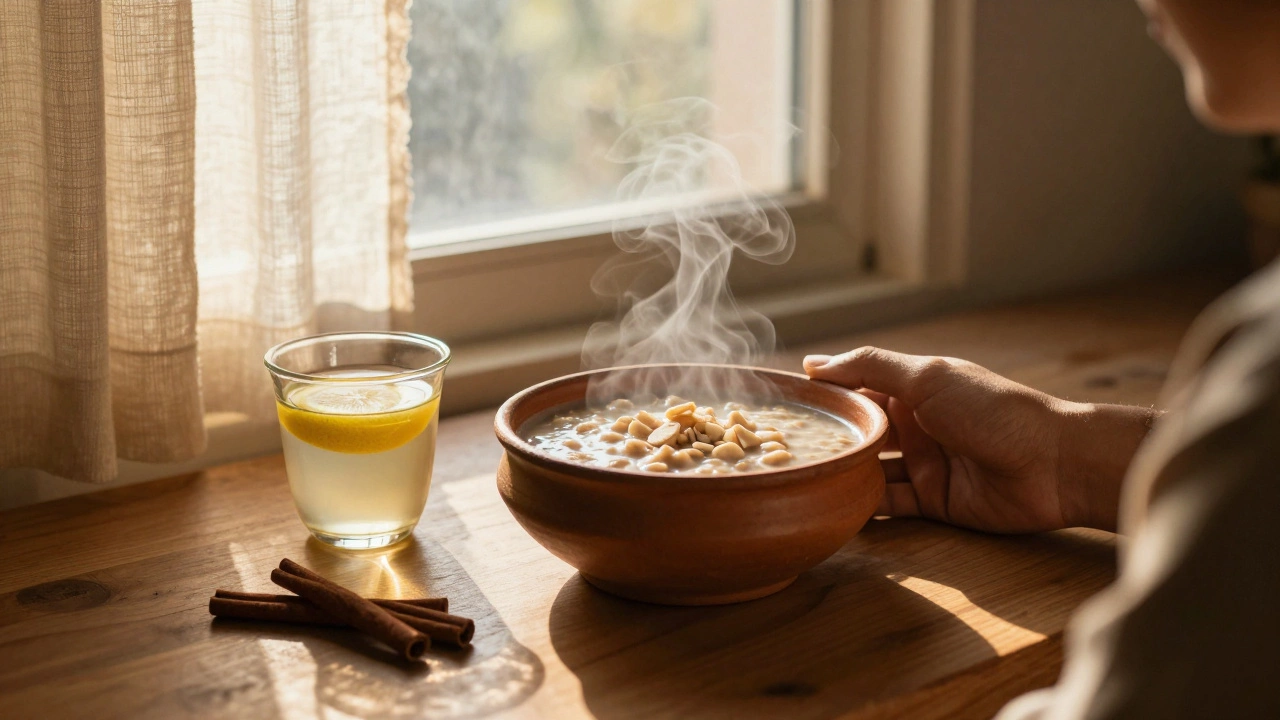
- Breakfast: 7 AM - 8:30 AM - Keep it light. Think warm porridge with cinnamon, steamed apples, or a small bowl of cooked quinoa with ghee. Avoid cold cereal, toast with jam, or smoothies. Cold foods dampen agni early in the day.
- Lunch: 12 PM - 1 PM - This is your main meal. Eat until you’re 75% full. Include whole grains, lentils, seasonal vegetables, and a small amount of healthy fat like ghee or olive oil. This is when your stomach acid is strongest. Skip leftovers or reheated food-fresh is best.
- Snack (if needed): 4 PM - 5 PM - Only if you’re truly hungry. A handful of roasted almonds, a cup of herbal tea with ginger, or a small piece of ripe fruit like papaya or mango. No sugary snacks or caffeine.
- Dinner: 6:30 PM - 7:30 PM - Light and early. Think soup, steamed veggies, or a small portion of khichdi (rice and lentils cooked with turmeric). Avoid heavy proteins like cheese, red meat, or fried foods. Your body needs to rest, not digest.
- No eating after 7:30 PM - This is non-negotiable. Eating after 8 PM forces your body to work while it’s trying to repair itself. It disrupts sleep, raises cortisol, and slows metabolism.
What Happens If You Eat Outside These Times?
Skipping the Ayurvedic window doesn’t just make you feel full-it changes your biology.
- Eating breakfast after 9 AM: Slows your metabolism for the rest of the day. You’ll crave sugar by mid-morning.
- Eating lunch after 2 PM: Your digestion weakens. Food sits in your stomach, ferments, and causes bloating or acid reflux.
- Dinner after 8 PM: Leads to poor sleep, weight gain around the waist, and sluggish mornings. Studies in Ayurvedic clinics show that people who eat dinner after 8:30 PM are 3x more likely to report poor sleep quality.
- Snacking all day: Constant grazing keeps agni confused. It never gets a break to reset. Result? Chronic indigestion and low energy.
How to Start Without Overhauling Your Life
You don’t need to become a monk to follow Ayurvedic eating times. Start small.
- Move dinner to 7 PM-even if it’s just a bowl of soup.
- Stop eating 3 hours before bed. Set a phone reminder if you need to.
- Make lunch your biggest meal. Even if you’re used to a big dinner, try shifting your protein and carbs to midday.
- Replace your morning coffee with warm water and lemon. Wait 30 minutes before eating.
Give it two weeks. Notice how you feel in the morning. Are you less bloated? More alert? Do you sleep deeper? Those are the real signs it’s working.
Common Myths About Ayurvedic Eating
There’s a lot of misinformation. Here’s what’s true.
- Myth: You must eat only vegetarian food in Ayurveda. Truth: Ayurveda allows meat, fish, and eggs-but only if they suit your body type and are eaten at the right time. A small portion of chicken at lunch is fine for some people.
- Myth: You can’t eat fruit with meals. Truth: Fruit digests fastest. Eat it alone, 30 minutes before a meal. Apples or pears with lunch? That’s asking for fermentation.
- Myth: Skipping breakfast is okay. Truth: Skipping breakfast throws off your entire day. Even a small warm meal kickstarts agni.
- Myth: Ayurveda is rigid. Truth: It’s flexible. If you work night shifts, your eating window shifts too. The rule is: eat your largest meal when your body is most active.
What to Drink Between Meals
Hydration matters-but not when you drink it.
- Drink warm water throughout the day. Cold drinks kill agni.
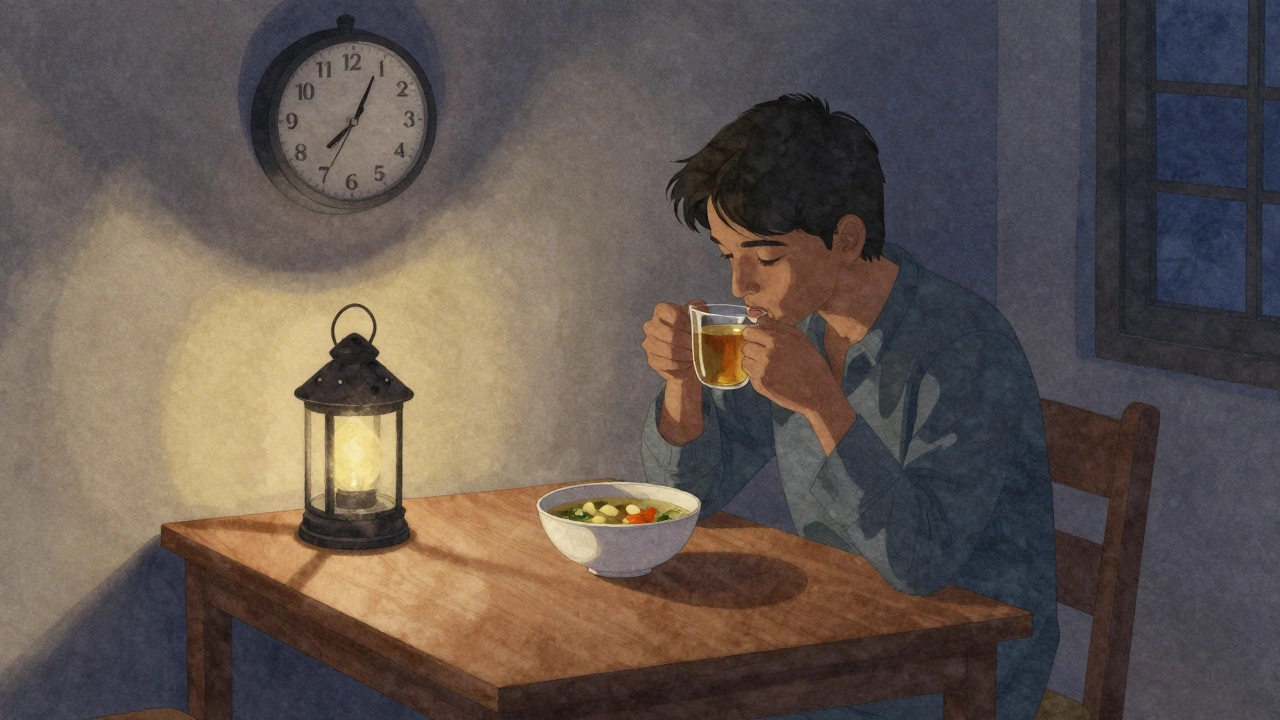
- Herbal teas like ginger, cumin, or fennel after meals help digestion.
- Avoid drinking large amounts during meals-it dilutes stomach acid.
- Wait 30 minutes after eating before drinking anything besides small sips of warm water.
How Your Body Type Changes the Rules
Ayurveda isn’t one-size-fits-all. Your dosha-Vata, Pitta, or Kapha-changes how you respond to timing.
- Vata types: Tend to skip meals and get hungry often. Eat every 3-4 hours. Warm, oily, grounding foods. Don’t skip snacks.
- Pitta types: Have strong appetites. Stick to the schedule strictly. Avoid spicy or acidic foods at night.
- Kapha types: Feel full easily. Eat lighter meals. Skip dinner if you’re not hungry. Fasting one day a week helps.
Knowing your dosha helps you tweak the timing. But even if you don’t know it, following the general schedule will still improve digestion.
Real-Life Examples: What It Looks Like
Meet Sarah, 42, a marketing manager in London. She used to eat cereal at 8:30 AM, a sandwich at 1 PM, and pasta with wine at 9 PM. She had bloating, brain fog, and trouble sleeping.
She switched to:
- 7:30 AM: Warm oatmeal with cinnamon and a spoon of almond butter
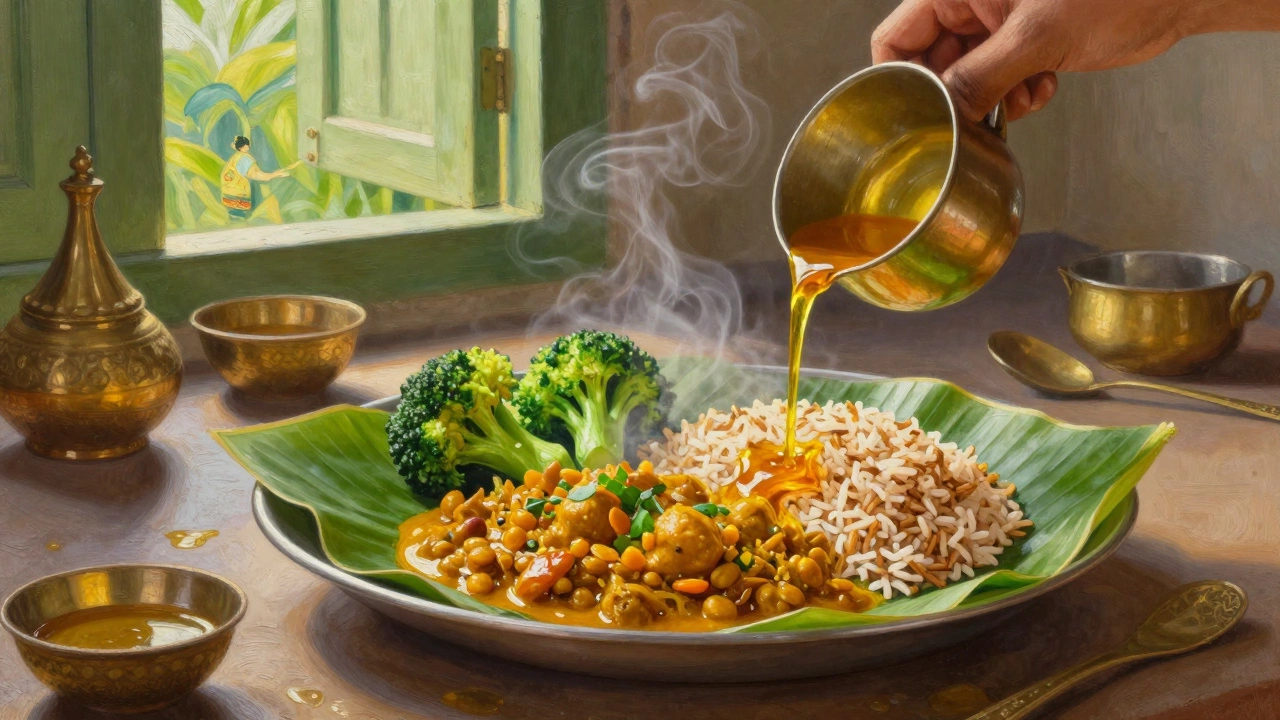
- 12:30 PM: Lentil curry with brown rice and steamed broccoli
- 4:30 PM: A few almonds and a cup of chamomile tea
- 7 PM: Vegetable soup and a small portion of quinoa
- No food after 7:30 PM
After three weeks, she slept through the night. Her bloating vanished. She didn’t lose weight-but she stopped gaining it. And she felt clear-headed for the first time in years.
Final Thought: It’s Not a Diet. It’s a Rhythm.
Ayurveda isn’t about restriction. It’s about alignment. When you eat in sync with your body’s natural rhythm, food becomes medicine-not a burden.
You don’t need to be perfect. Miss a meal? Eat it earlier tomorrow. Stay up late? Skip dessert. The goal isn’t purity-it’s consistency over time.
Your body knows the right time to eat. You just have to listen.
Can I drink coffee in the morning according to Ayurveda?
Ayurveda doesn’t ban coffee, but it doesn’t recommend it first thing in the morning. Coffee is drying and heating, which can overstimulate Vata and Pitta. If you must drink it, wait until after breakfast, and have it with a little milk or ghee to soften its effect. Warm water with lemon is a gentler way to start the day.
Is it okay to eat fruit in the evening?
No. Fruit digests quickly and ferments if eaten late. Even apples or bananas can cause gas or disrupt sleep if eaten after 6 PM. If you crave something sweet, try a small piece of cooked pear or a spoon of honey in warm water instead.
What if I work night shifts? Do I still follow the same times?
Yes-but flip the schedule. Your main meal should be when you’re most active, not when the sun is highest. If you work 10 PM to 6 AM, eat your largest meal around 2 AM (your Pitta window), have a light snack at 6 AM, and a small meal at 10 AM. The key is consistency and avoiding heavy food during your rest period.
Why is dinner so important in Ayurveda?
Dinner sets the tone for your sleep and next-day energy. Eating heavy food at night forces your body to divert energy from repair to digestion. That’s why people who eat late often wake up tired, even after 8 hours of sleep. A light, early dinner lets your body focus on healing, detoxing, and restoring.
Can I fast on weekends according to Ayurveda?
Yes-but only if you’re Kapha-dominant or have strong digestion. A light fast (water, herbal tea, or broth) one day a week can reset agni. Don’t fast if you’re Vata-dominant or have low energy. Instead, eat small, warm meals every 3-4 hours to stay balanced.
If you’re tired of feeling full after meals, sluggish in the afternoon, or wired at night, the answer might not be in your grocery cart-it’s in your clock. Start with one change: move dinner earlier. See how you feel in a week. That’s how Ayurveda works-not with drastic rules, but with quiet, consistent shifts.