Open-Heart Surgery Survival Rate: What You Need to Know
Open-Heart Surgery Risk Estimator
Fill in the details on the left to see your estimated survival rates and risk factors.
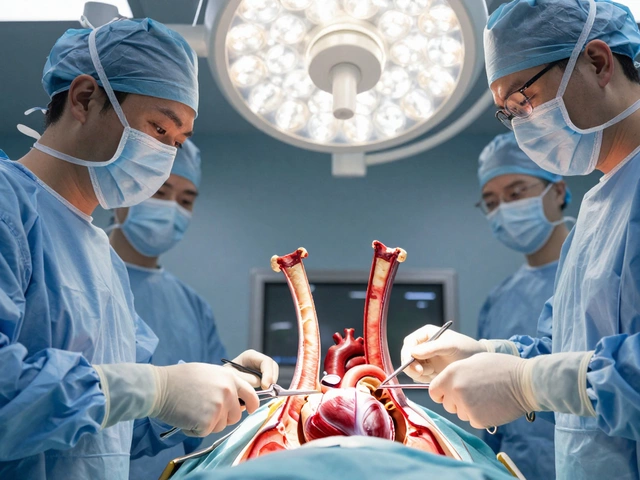
Imagine sitting in a hospital waiting room, the air thick with anxiety, while your loved one is inside undergoing open-heart surgery. It’s a phrase that sounds terrifyingly invasive-cutting open the chest to work on the beating heart. But here’s the reality check: for most patients, this isn’t a gamble; it’s a calculated, high-success medical procedure. The fear often outweighs the actual risk. If you’re looking at the numbers, the survival rate for open-heart surgery is surprisingly robust, often exceeding 95% for elective cases. But why does that number fluctuate? And what actually determines whether you’ll be walking out of the hospital in a few days or facing a longer road?
We need to talk about what "survival" really means in this context. It’s not just about making it through the operation. It’s about navigating the next 30 days, the first year, and beyond without major complications like stroke, infection, or kidney failure. Let’s break down the data, strip away the jargon, and look at what actually influences your odds.
The Big Numbers: What Do the Stats Say?
Let’s start with the headline figure. According to data from the Society of Thoracic Surgeons (STS), the operative mortality rate for isolated coronary artery bypass grafting (CABG)-the most common type of open-heart surgery-is roughly 1% to 2% for low-risk patients. That means 98 to 99 out of 100 people survive the immediate surgical period. For valve replacements, the numbers are similarly encouraging, hovering around 1-3% depending on the valve type and patient health.
But averages can be misleading. A 70-year-old marathon runner has a different profile than an 80-year-old with diabetes and previous strokes. This is where risk stratification comes in. Hospitals use scoring systems like the STS Predicted Risk of Mortality (PROM) to estimate individual chances. If your score is low, your survival chance is near-perfect. If it’s high, the team might recommend minimally invasive options instead.
| Procedure | Avg. Operative Mortality | 30-Day Survival | 5-Year Survival |
|---|---|---|---|
| CABG (Bypass) | 1.5% | 98.5% | 85-90% |
| Aortic Valve Replacement | 2.0% | 98.0% | 80-85% |
| Mitral Valve Repair | 1.0% | 99.0% | 90-95% |
| Combined Procedures | 4.0% | 96.0% | 75-80% |
Notice how combined procedures carry higher risks. Doing two things at once puts more stress on the body. But even then, the survival rate remains high. The key takeaway? Don’t let the term "open-heart" scare you into refusing necessary treatment. Untreated severe heart disease carries a much higher mortality risk than the surgery itself.
Why Does One Patient Survive While Another Doesn’t?
You might ask, "If the stats are so good, why do some people die?" It’s rarely the surgery itself that fails. It’s usually the body’s reaction to the trauma. Several factors play a critical role in determining your personal survival rate.
Age and Frailty: Age alone isn’t a death sentence, but biological age matters. An 80-year-old who gardens daily has better physiological reserves than a 60-year-old who is sedentary and obese. Frailty scores are now used alongside chronological age to predict outcomes more accurately.
Comorbidities: Diabetes, chronic kidney disease, and COPD are the big three that complicate recovery. Diabetics have slower wound healing and higher infection risks. Kidney issues can worsen due to the contrast dye and blood pressure changes during surgery. If you have these conditions, your surgeon will likely optimize them before operating.
Emergency vs. Elective: There is a massive difference between scheduled surgery and emergency surgery. In an emergency, such as a ruptured aneurysm or acute dissection, the body is already in shock. Survival rates drop significantly because there’s no time to prepare the patient. Elective surgeries allow for pre-habilitation-building up strength and nutrition before the cut.
Beyond Survival: Quality of Life and Complications
Surviving the surgery is step one. Step two is avoiding the pitfalls that ruin quality of life. When we talk about "success," we also mean freedom from major adverse events. The most common non-fatal complications include atrial fibrillation (irregular heartbeat), which affects about 20-30% of patients temporarily. It’s manageable with medication but can prolong hospital stays.
Stroke is another concern, occurring in about 1-2% of cases. This happens if tiny clots form during the procedure and travel to the brain. Modern techniques, like off-pump surgery (where the heart keeps beating), reduce this risk slightly, though traditional on-pump methods remain the gold standard for complex cases.
Infections are rare but serious. Sternotomy infections (infection of the breastbone) happen in less than 1% of cases but require long-term antibiotics or re-operation. Good hygiene and strict post-op care protocols drastically reduce this risk.
How Technology Is Changing the Odds
Medicine doesn’t stand still. Over the last decade, several advancements have nudged those survival rates upward. Robotic-assisted surgery allows for smaller incisions, reducing trauma. Enhanced Recovery After Surgery (ERAS) protocols focus on early mobilization-getting patients out of bed within hours, not days. This prevents pneumonia and blood clots, two silent killers in post-op recovery.
Minimally invasive techniques are gaining ground. While not every case qualifies, procedures like TAVR (Transcatheter Aortic Valve Replacement) offer catheter-based alternatives for high-risk patients. These aren't "open-heart" in the traditional sense, but they address the same problems with lower immediate mortality. If you’re deemed too high-risk for open surgery, ask about these alternatives.

Preparing for the Best Outcome
You’re not powerless here. Your actions before and after surgery directly impact your survival rate. Here’s what you can control:
- Quit Smoking: Even stopping 4 weeks before surgery improves lung function and reduces infection risk.
- Manage Blood Sugar: Tight glucose control before surgery lowers complication rates.
- Pre-Habilitation: Light exercise, like walking, strengthens your heart and muscles.
- Nutrition: Eat protein-rich foods to support tissue repair.
Post-surgery, adherence to medication is non-negotiable. Skipping anti-clotting drugs or statins increases the risk of graft failure or new blockages. Think of the surgery as fixing the plumbing; the meds keep the pipes clear.
When to Worry About Red Flags
While most recoveries go smoothly, watch for warning signs in the first 30 days. Shortness of breath that worsens, fever over 100.4°F (38°C), redness or discharge from the incision, or sudden weight gain (fluid retention) need immediate attention. Catching these early prevents small issues from becoming life-threatening emergencies.
Remember, the statistics are population-wide. Your specific journey depends on your unique health profile. Have an honest conversation with your cardiologist. Ask them: "What is my predicted risk score?" and "What are the alternatives if I don’t proceed?" Knowledge dispels fear.
Is open-heart surgery considered high risk?
For the average patient, no. With modern techniques, the operative mortality rate is typically under 2%. However, risk increases with age, emergency status, and other health conditions like diabetes or kidney disease. Always review your individual risk profile with your surgeon.
How long does recovery take after open-heart surgery?
Hospital stay is usually 5-7 days. Full recovery takes 6-8 weeks for sternum healing. Most patients return to normal activities, including driving and light work, within 6-12 weeks. Cardiac rehabilitation programs significantly speed up this process.
Can you live a normal life after open-heart surgery?
Yes. Many patients report improved energy levels and quality of life because their heart is finally getting adequate blood flow. Adhering to lifestyle changes like diet, exercise, and medication ensures long-term success and longevity.
What is the difference between CABG and angioplasty?
Angioplasty uses a balloon and stent to open blocked arteries via a catheter, requiring no large incisions. CABG (bypass) uses healthy vessels to reroute blood around blockages. CABG is more invasive but offers better long-term results for complex, multi-vessel disease.
Does age affect open-heart surgery survival rates?
Yes, but not linearly. While mortality rises slightly with each decade of age, many patients over 80 undergo successful surgery. Biological fitness, rather than chronological age, is a stronger predictor of survival and recovery potential.