
How Much Weight Can You Lose With Ozempic and Metformin?
Ozempic and Metformin Weight Loss Estimator
Based on clinical studies, users typically lose 10-15% of body weight over 6-12 months when combining Ozempic and Metformin with lifestyle changes.
People asking how much weight they can lose with Ozempic and metformin aren’t just curious-they’re often struggling with insulin resistance, prediabetes, or type 2 diabetes and looking for real results. These two medications aren’t magic pills, but they’re two of the most studied tools for weight loss in people with metabolic issues. And yes, the numbers matter: many users lose between 10% and 15% of their body weight over a year when using them together, especially when paired with lifestyle changes.
How Ozempic Works for Weight Loss
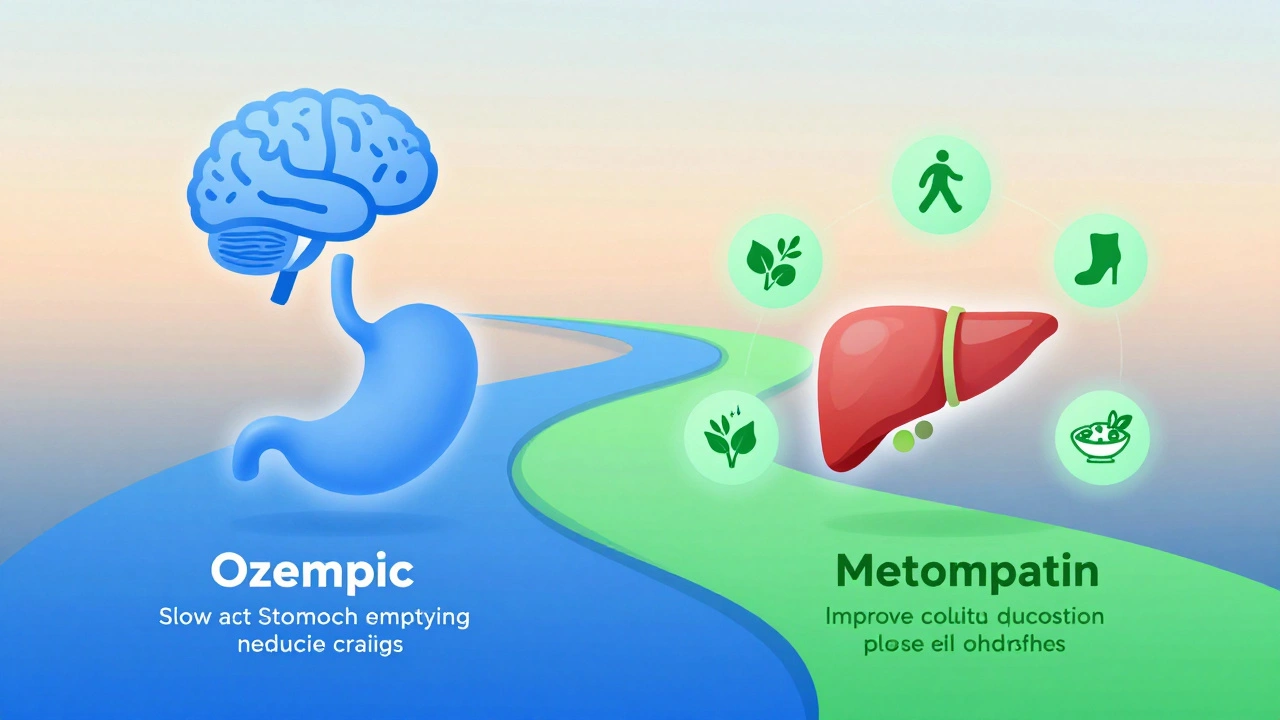
Ozempic (semaglutide) is a GLP-1 receptor agonist. It mimics a hormone your body naturally makes after eating. That hormone tells your brain you’re full, slows down stomach emptying, and reduces cravings. In clinical trials, people using Ozempic for diabetes lost an average of 12 to 15 pounds over 68 weeks. But those who started heavier-say, 250 pounds or more-often lost 30 to 50 pounds. Some even lost over 60 pounds. That’s not just a few pounds off the scale; it’s enough to reverse prediabetes in many cases.
The key is consistency. Ozempic doesn’t work if you take it once and stop. It takes 16 to 20 weeks to reach the full dose, and most people don’t see major weight loss until after three to six months. Also, it’s not just about eating less. It’s about your brain no longer screaming for sugar or snacks. Many users say they feel like they’ve lost their hunger for junk food.
How Metformin Helps You Lose Weight
Metformin has been around since the 1950s. It’s not a weight loss drug by design, but it’s one of the most effective tools we have for people with insulin resistance. It works by lowering blood sugar and reducing how much glucose your liver releases. That means fewer sugar spikes, fewer crashes, and fewer cravings.
In studies, people on metformin lost about 5% to 7% of their body weight over six months. That’s around 10 to 15 pounds for someone weighing 200 pounds. It’s slower than Ozempic, but it’s steady. Unlike Ozempic, metformin doesn’t make you feel full-it makes your body use energy more efficiently. People often notice less bloating, more stable energy, and fewer midnight cravings.
Metformin also helps with PCOS-related weight gain. Women with insulin resistance due to PCOS often lose weight more easily on metformin than on diet alone. It’s not a quick fix, but it’s a long-term ally.
Why They Work Better Together
When you combine Ozempic and metformin, you’re attacking weight loss from two angles: brain signaling and metabolic function. Ozempic reduces appetite and slows digestion. Metformin lowers insulin levels and improves how your muscles use glucose. Together, they create a powerful synergy.
A 2023 study in The Lancet Diabetes & Endocrinology followed 312 adults with type 2 diabetes and obesity. Those on both drugs lost an average of 14.3% of their body weight over 72 weeks. That’s more than double the weight loss seen with either drug alone. People who lost the most weight were also those who ate more protein, moved daily, and didn’t drink sugary beverages.
It’s not just about the scale. Waist circumference shrinks. Blood pressure drops. Liver fat decreases. Many people stop needing other diabetes meds. Some even get off insulin entirely.
What to Expect Realistically
Not everyone loses the same amount. Your starting weight, age, activity level, and genetics all play a role. Here’s a realistic breakdown:
- People starting at 200-250 lbs: 20-40 lbs lost in 6-12 months
- People starting at 250-300 lbs: 30-60 lbs lost in 9-15 months
- People starting under 180 lbs: 10-20 lbs lost, mostly from belly fat
Weight loss slows after six months. That’s normal. Your body adapts. The goal isn’t to lose 100 pounds-it’s to lose enough to improve your health. Even a 5% loss cuts your risk of heart disease and diabetes complications by nearly half.
Side Effects and How to Manage Them
Both drugs can cause stomach issues-nausea, bloating, diarrhea. These are most common in the first four weeks. Most people get used to them. The trick? Start low. Go slow. Ozempic is usually started at 0.25 mg once a week. Many doctors now recommend staying at that dose for 4-6 weeks before increasing. Metformin is often started at 500 mg once a day, then slowly increased.
Drink water. Eat smaller meals. Avoid greasy or sugary foods. If nausea hits, try ginger tea or peppermint. Most side effects fade. If they don’t, talk to your doctor. Don’t stop cold turkey-especially Ozempic. Stopping suddenly can cause blood sugar spikes.
Who Shouldn’t Use These Drugs
These aren’t for everyone. You shouldn’t take Ozempic if you have a personal or family history of medullary thyroid cancer or multiple endocrine neoplasia syndrome type 2. Metformin is risky if you have severe kidney disease or are dehydrated. Both are usually avoided during pregnancy unless the benefits clearly outweigh the risks.
People with a history of pancreatitis should be cautious with Ozempic. Those with severe GI disorders (like gastroparesis) may not tolerate it well. Always get tested for kidney function and thyroid health before starting.
Cost and Access in the UK
In the UK, both drugs are available on the NHS for people with type 2 diabetes who meet specific criteria. Ozempic is usually prescribed if you’ve tried metformin and lifestyle changes but still haven’t reached your HbA1c or weight goals. Metformin is almost always first-line.
Private prescriptions for Ozempic cost between £80 and £120 per month. That’s expensive for many. Some pharmacies offer patient assistance programs. Others work with weight management clinics that bundle the drug with nutrition coaching.
Metformin is cheap-often under £5 for a month’s supply on the NHS. That’s why it’s still the backbone of treatment.

What Happens When You Stop?
This is the question no one wants to ask-but you need to know. If you stop Ozempic, most people regain 60% to 70% of the weight within a year. That’s not because you failed. It’s because the drug was doing the work your body couldn’t. The same is true for metformin, though weight regain is slower.
That’s why long-term success depends on building habits: eating protein-rich meals, walking daily, sleeping well, and managing stress. The drugs give you a window-usually 12 to 18 months-to reset your metabolism. Use that time to retrain your body, not just lose weight.
Real Stories, Real Results
One woman in Manchester, 52, started Ozempic and metformin after her HbA1c hit 8.9%. She weighed 240 pounds. After 10 months, she lost 41 pounds. Her HbA1c dropped to 5.7%. She stopped all diabetes meds. She now walks 6,000 steps a day and cooks at home.
A man in Birmingham, 60, had tried every diet. He started metformin alone and lost 12 pounds in six months. His doctor added Ozempic. In another 10 months, he lost 38 more pounds. He says he doesn’t feel hungry anymore. He doesn’t crave sweets. He’s not on any other meds.
These aren’t outliers. They’re people who used the tools available to them-and didn’t expect perfection. They just wanted to feel better.
What Comes After Weight Loss?
Weight loss isn’t the end. It’s the beginning. Once you’ve lost weight, your body tries to get it back. That’s biology. That’s why maintenance is harder than losing.
Many people transition off Ozempic after 12-18 months, keeping only metformin. Others stay on low-dose Ozempic long-term. There’s no shame in that. If it keeps your blood sugar stable and your waistline shrinking, it’s working.
Focus on muscle retention. Strength training twice a week helps. Protein intake matters-aim for 1.2 to 1.6 grams per kg of body weight. Sleep seven hours. Manage stress. These are the real keys to keeping weight off.