
How Long Does Heart Surgery Take? Understanding Procedure Durations by Type
Heart Surgery Duration Calculator
Estimate Your Heart Surgery Duration
Enter details about the procedure to get an estimated surgery duration based on the latest medical data.
Estimated Duration
Note: This is an estimate based on typical medical data. Actual surgery time may vary based on individual circumstances.
Contrary to popular belief, heart surgery duration isn't a one-size-fits-all procedure when it comes to time. A simple valve repair might wrap up in under two hours, while a complex multi-vessel bypass could stretch to six hours or more. Let’s break down exactly what determines how long these procedures take.
Common Heart Surgeries and Their Durations
Coronary Artery Bypass Graft (CABG) is one of the most common heart surgeries. For a standard CABG, where the surgeon bypasses blocked arteries using veins from the leg, the procedure typically takes 3 to 6 hours. This includes time for preparing the patient, making the incision, connecting the heart-lung machine, and closing the chest. If the patient has multiple blocked arteries requiring several grafts, the surgery may take longer.
Aortic valve replacement usually takes 2 to 4 hours. This surgery replaces a damaged aortic valve with a mechanical or biological one. Minimally invasive approaches, which use smaller incisions, can reduce this time to around 2 hours. However, complications like calcified valves or previous surgeries can extend the duration.
Mitral valve repair often takes 2 to 3 hours. Repairing the mitral valve is generally quicker than replacing it because it involves fixing the existing valve rather than removing it entirely. Surgeons might use techniques like annuloplasty rings or chordal repair to restore function.
Heart transplant is one of the most complex procedures, typically lasting 4 to 8 hours. This surgery involves replacing the entire heart with a donor organ. The process includes removing the diseased heart, implanting the new one, and reconnecting blood vessels. The time can vary based on the availability of a suitable donor heart and the patient's condition.
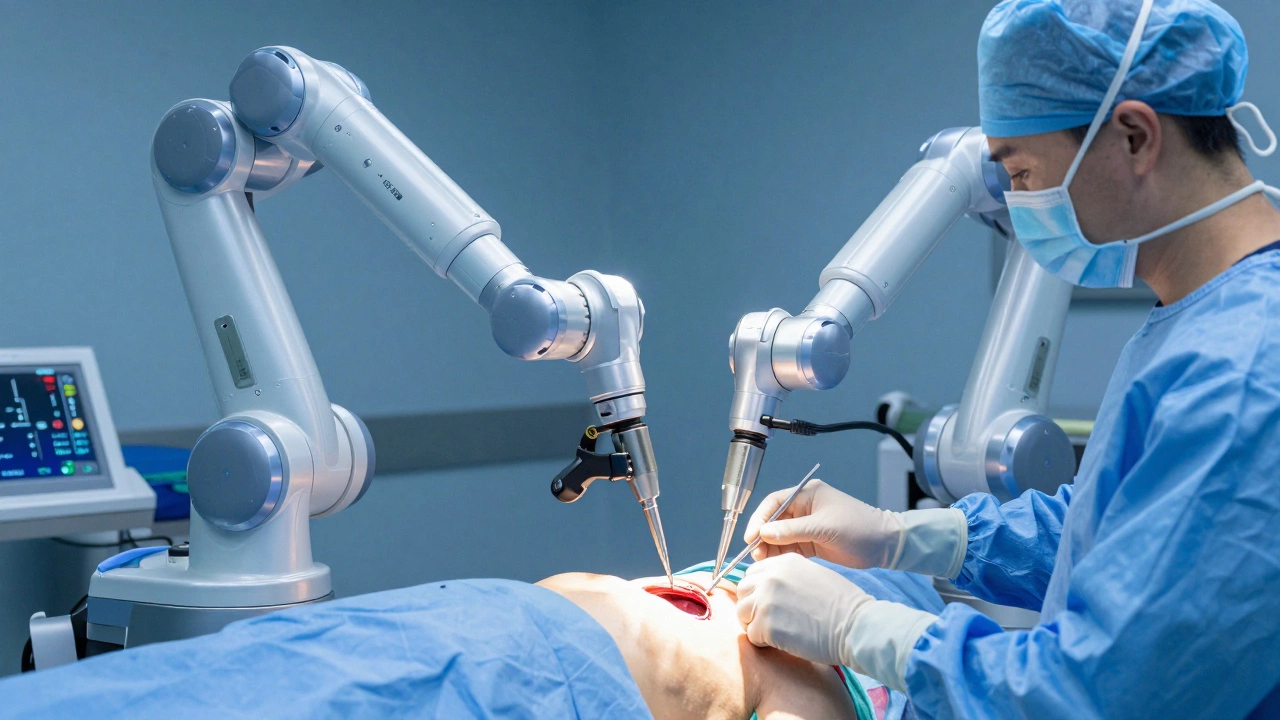
Minimally invasive cardiac surgery techniques are becoming more common. For example, a robotic-assisted CABG might take 2 to 4 hours. These approaches use smaller incisions and advanced tools, which can reduce surgery time and speed up recovery. However, not all patients are candidates for minimally invasive options.
| Surgery Type | Typical Duration | Notes |
|---|---|---|
| Coronary Artery Bypass Graft (CABG) | 3-6 hours | Standard procedure; may vary with number of grafts |
| Minimally Invasive CABG | 2-4 hours | Smaller incision, often robotic-assisted |
| Aortic Valve Replacement | 2-4 hours | Simple replacement; longer if complex |
| Mitral Valve Repair | 2-3 hours | Usually quicker than replacement |
| Heart Transplant | 4-8 hours | Complex procedure requiring donor heart |
Factors That Influence Surgery Time
Several factors can affect how long heart surgery takes. Here are the key ones:
Patient health plays a major role. Patients with diabetes, kidney disease, or other chronic conditions often require more time. Surgeons need to be extra cautious to avoid complications during the procedure. For example, a patient with poor circulation may need additional steps to ensure blood flow during surgery.
The complexity of the surgery also matters. A single-vessel bypass is quicker than a multi-vessel procedure. Similarly, repairing a mitral valve is usually faster than replacing it. If the surgery involves multiple issues-like repairing a valve and doing a bypass at the same time-the time increases significantly.
Surgeon experience can impact duration. A skilled surgeon familiar with a specific technique may complete the procedure more efficiently. For instance, surgeons who specialize in robotic-assisted surgery often have shorter operation times compared to those using traditional methods.
Surgical approach is another factor. Traditional open-heart surgery requires a sternotomy (cutting through the breastbone), which takes time to open and close. Minimally invasive approaches use smaller incisions, sometimes through the side of the chest, which can reduce surgery time by up to an hour. However, this isn't always possible depending on the patient's anatomy.
Unexpected complications during surgery can add time. For example, if bleeding occurs or the heart doesn't respond well to the heart-lung machine, the team may need to pause and address the issue. This is why surgeons always plan for potential delays.
What Happens During Heart Surgery?
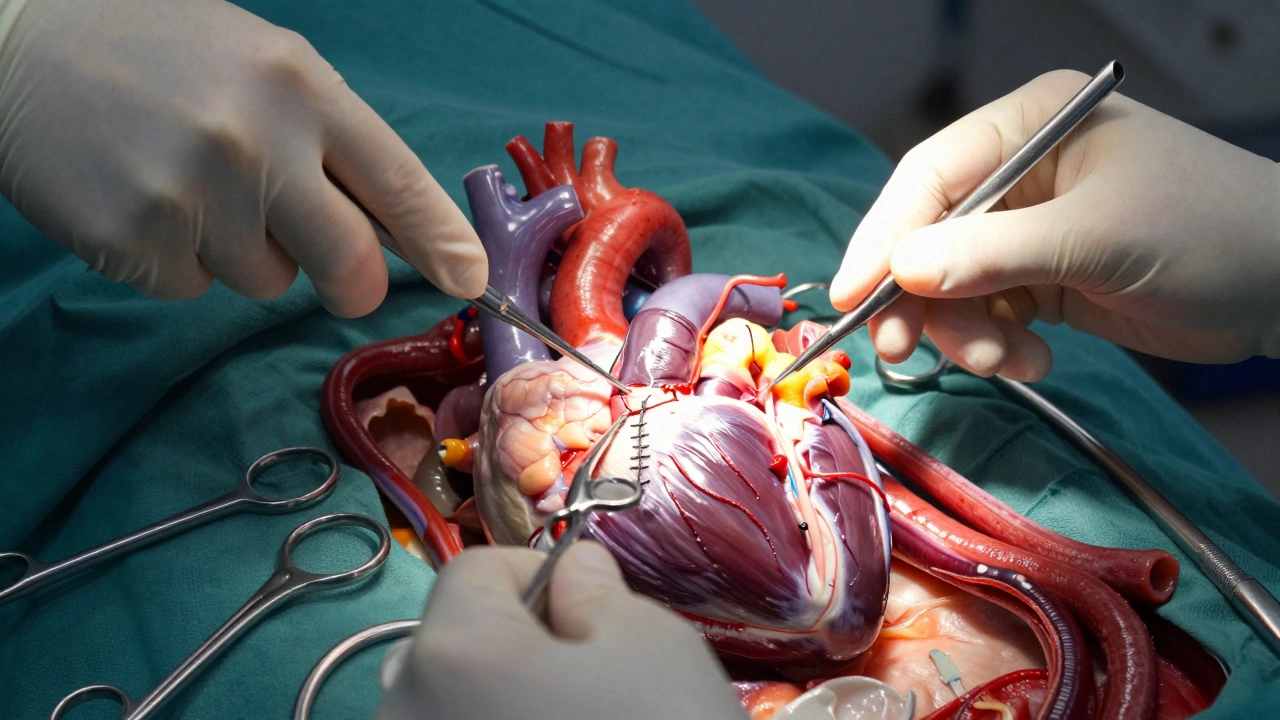
Understanding the steps can help explain why heart surgery takes time. Here's a typical timeline for a CABG procedure:
- Preparation (30-60 minutes): The patient is given anesthesia, and the surgical team prepares the body for surgery. This includes placing monitoring devices and setting up the heart-lung machine.
- Incision (15-30 minutes): The surgeon makes a sternotomy (cutting through the breastbone) for traditional surgery or a smaller incision for minimally invasive approaches. This step must be precise to avoid damaging surrounding tissues.
- Heart-lung machine setup (10-20 minutes): The heart-lung machine takes over blood circulation and oxygenation, allowing the heart to be stopped temporarily. This requires careful connection of tubes to the major blood vessels.
- Bypass grafting (60-120 minutes): The surgeon takes a healthy blood vessel from the leg or chest and attaches it to bypass the blocked artery. Each graft takes time to create and secure properly.
- Heart restart and monitoring (15-30 minutes): Once the grafts are in place, the heart is restarted, and the machine is gradually turned off. The team monitors heart function to ensure stability.
- Closing the incision (30-60 minutes): The breastbone is wired back together, and the chest is sutured. This step is critical to prevent infection and ensure proper healing.
This breakdown shows why even a straightforward CABG takes several hours. Each step requires precision and careful attention to detail.
Real-World Examples of Heart Surgery Durations
Let’s look at a few actual cases to see how these factors play out:
A 65-year-old man with three blocked arteries underwent a standard CABG. His surgery took 4.5 hours. The procedure included three grafts, and his overall health was good, so there were no major complications. The surgeon used traditional open-heart techniques, which contributed to the longer time.
In contrast, a 58-year-old woman with a single aortic valve replacement had a minimally invasive procedure. Her surgery lasted only 1.8 hours. The surgeon used a small incision and robotic assistance, which sped up the process. She also had no underlying health issues, making the procedure more straightforward.
Another example is a 70-year-old patient with both mitral valve regurgitation and aortic stenosis. This combined procedure took 5.5 hours. The surgeon had to repair the mitral valve and replace the aortic valve, which required more time and careful coordination between steps.
These examples highlight how patient-specific factors and surgical complexity directly impact the duration of heart surgery.
Common Misconceptions About Heart Surgery Time
There are several myths about how long heart surgery takes:
One common misconception is that all heart surgeries last all day. In reality, many procedures can be completed in 2-4 hours. For example, a single valve replacement using minimally invasive techniques often wraps up in under two hours. This is especially true for patients with good overall health and straightforward conditions.
Another myth is that longer surgery time always means better outcomes. This isn't true. A skilled surgeon may complete a procedure more efficiently without compromising safety. For instance, a CABG done in 3.5 hours by an experienced team is often just as successful as one taking 5 hours.
Some people also believe that heart surgery time is fixed for each procedure. However, as we've seen, factors like patient health and surgical approach can significantly alter the duration. A heart transplant might take 4 hours for one patient and 8 hours for another, depending on individual circumstances.
It's important to remember that surgery time is just one part of the process. Recovery time and post-operative care are equally critical for a successful outcome.
How long does a standard CABG surgery take?
A standard coronary artery bypass graft (CABG) surgery typically takes 3 to 6 hours. This includes time for preparing the patient, making the incision, using the heart-lung machine, and closing the chest. The exact duration depends on factors like the number of blocked arteries and the patient's overall health.
Can heart surgery take less than 2 hours?
Yes, certain procedures like a single-valve replacement using minimally invasive techniques can be completed in under two hours. For example, a straightforward aortic valve replacement with a small incision might take about 1.5 hours. However, more complex surgeries, like multiple valve repairs or combined procedures, will take longer.
Why does heart surgery take so long?
Heart surgery takes time because it involves multiple precise steps. The surgeon must safely access the heart, often using a heart-lung machine to maintain circulation. Each graft or valve repair requires careful placement and testing. Additionally, the surgical team must monitor the patient's vital signs throughout the procedure to ensure safety. Rushing any step could lead to complications, so the time taken is necessary for a successful outcome.
Does the type of incision affect surgery time?
Yes, the surgical approach significantly impacts duration. Traditional open-heart surgery requires cutting through the breastbone (sternotomy), which takes time to open and close. Minimally invasive techniques use smaller incisions, sometimes through the side of the chest, which can reduce surgery time by up to an hour. However, not all patients are candidates for these approaches due to their anatomy or health condition.
What role does the heart-lung machine play in surgery time?
The heart-lung machine is crucial for most open-heart surgeries. It takes over the heart and lung functions, allowing the surgeon to operate on a still heart. Setting up this machine adds about 10-20 minutes to the procedure. However, it also enables more precise work on the heart itself, which can save time compared to operating on a beating heart. Without it, many complex procedures would be impossible or take much longer.
Are there ways to reduce heart surgery time?
Yes, advances in surgical techniques are helping to reduce surgery time. Minimally invasive approaches, robotic assistance, and better pre-operative planning all contribute. For example, robotic-assisted CABG often takes 2-4 hours instead of 3-6. However, the priority is always safety. Surgeons won't rush a procedure just to save time; they focus on doing it right, even if it takes a bit longer.