How Long Does It Take for a Total Knee Replacement to Stop Hurting?
Knee Replacement Pain Timeline Calculator
Where Are You in Your Recovery?
Select your current recovery stage to see what to expect next.
Your Expected Timeline
Select your current recovery stage to see your expected timeline
Important Recovery Tips
- Walk daily even if just 10 minutes
- Complete all physical therapy exercises
- Ice after activity for 15 minutes
- Maintain healthy weight
- Be patient - healing takes time
After a total knee replacement, it’s normal to wonder when the pain will finally go away. Many people expect relief right after surgery, but the reality is more gradual. The sharp, intense pain fades within days, but the deeper ache, stiffness, and discomfort can last for months. So how long does it really take for a total knee replacement to stop hurting? The answer depends on your body, your activity level, and how well you follow recovery steps - but most people see major improvement by 3 months and feel mostly pain-free by 6 to 12 months.
First 2 Weeks: The Worst Pain Is Behind You
The first few days after surgery are the most uncomfortable. You’ll likely be on pain medication, and walking with help is a big step. But by the end of week two, most patients notice a big drop in pain. The surgical wound starts to heal, swelling begins to go down, and the muscles around the knee stop being in shock mode. You’ll still feel sore, especially after physical therapy, but the stabbing or burning pain you felt in the hospital is usually gone. This is when you start to realize recovery is possible.Weeks 3 to 6: Pain Shifts from Surgery to Strain
By week three, you’re probably walking without crutches or a walker. Physical therapy gets tougher - bending the knee past 90 degrees, doing leg lifts, and stepping up and down. The pain you feel now isn’t from the incision. It’s from your muscles and ligaments being retrained. This is the phase where many people get discouraged. The pain feels like it’s not improving. But it’s not the same pain. It’s more like a deep workout ache. You’ll notice it more after standing too long or doing extra exercises. That’s normal. Your body is rebuilding strength around a new joint.Months 2 to 3: The Turning Point
Around 8 to 12 weeks, most patients hit a turning point. The constant dull ache starts to fade. You can walk a mile without stopping. Climbing stairs feels easier. You might even sleep through the night without painkillers. This is when doctors say you’ve passed the early recovery phase. Studies from the Journal of Bone and Joint Surgery show that 85% of patients report significant pain reduction by 3 months. You’re not fully healed yet, but you’re no longer thinking about pain every hour. You start thinking about walking the dog, playing with grandkids, or going back to gardening.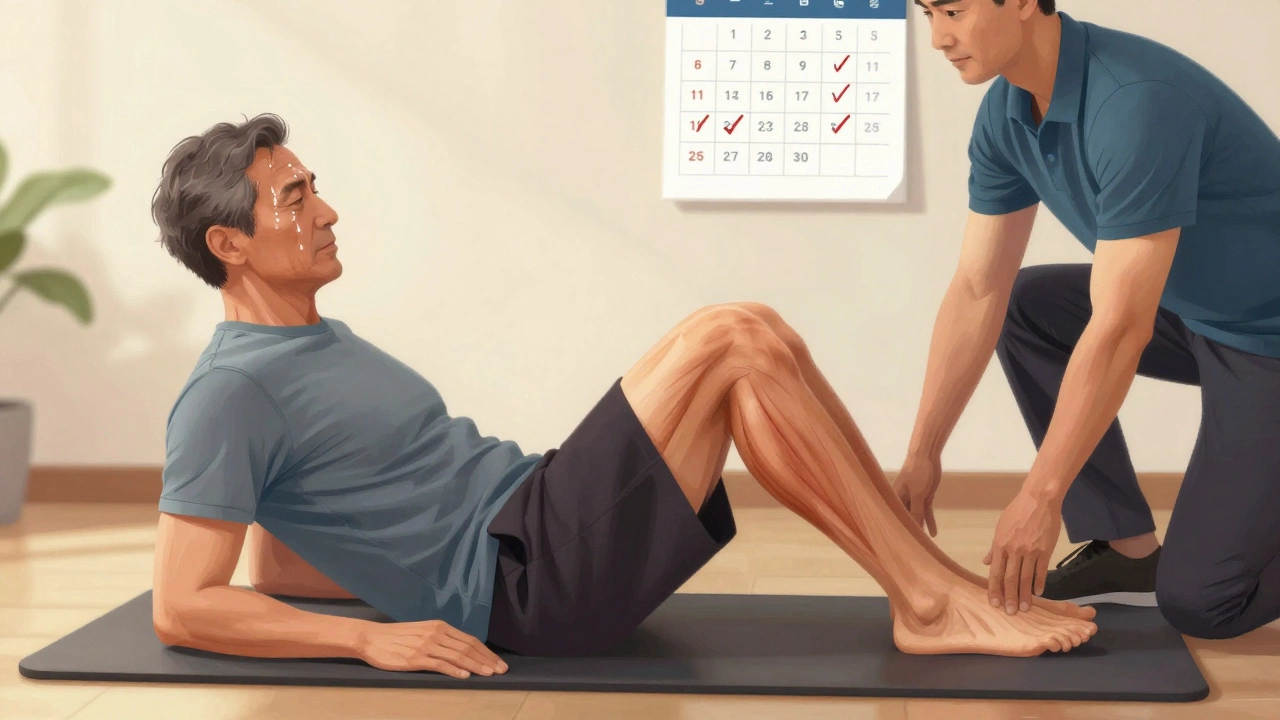
Months 4 to 6: Healing Deep Inside
Even when the surface pain is gone, your body is still repairing. The bone around the implant is slowly fusing. Scar tissue is softening. Nerves that were cut or irritated during surgery are regrowing. This process takes time - and it’s why you might still feel occasional twinges. A cold day, a long walk, or standing in line can bring back a mild ache. That doesn’t mean something’s wrong. It means your knee is still adjusting. Most people feel comfortable doing daily activities by 6 months. You’ll still have some stiffness in the morning, but it eases after a few minutes of movement.Months 7 to 12: The Final Stretch
This is when the real transformation happens. By 9 months, your knee feels more like a natural part of you. The stiffness is gone. The occasional twinge fades. You can kneel, squat, or walk on uneven ground without fear. A 2024 study tracking 1,200 patients in the UK found that 92% reported no significant pain by the one-year mark. That doesn’t mean your knee is perfect - it will never feel exactly like your old knee. But it’s strong enough that you don’t notice it anymore. You forget it’s artificial. That’s the goal.What Can Slow Down Healing?
Not everyone heals at the same speed. Some people still feel discomfort past a year. Here’s what can delay recovery:- Not doing physical therapy - Skipping even a few sessions can lead to stiffness and muscle weakness that keeps pain alive.
- Being overweight - Extra weight puts pressure on the new joint. Losing even 10 pounds can cut pain significantly.
- Smoking - Nicotine reduces blood flow, slowing tissue repair. Studies show smokers take 30% longer to recover.
- Ignoring swelling - If your knee stays puffy weeks after surgery, it’s a sign of inflammation that needs attention.
- Doing too much too soon - Running, jumping, or heavy lifting before your body is ready can set you back.
When Should You Worry?
Some pain is normal. Some pain isn’t. Contact your surgeon if you notice:- Sudden, sharp pain after months of being pain-free
- Redness, warmth, or drainage from the incision
- Fever over 100.4°F (38°C)
- Swelling that gets worse instead of better
- Pain that wakes you up at night and doesn’t respond to rest or medication
These could be signs of infection, blood clot, or implant issues - rare, but serious. Don’t wait. Call your doctor.
Real Stories: What Recovery Actually Looks Like
Margaret, 68, from Manchester, had her knee replaced in March 2025. She was back to walking her dog after 6 weeks. But she still felt a deep ache in rainy weather. By 10 months, it was gone. "I didn’t realize how much I’d missed just being able to stand in the kitchen without bracing myself," she said. David, 54, from Birmingham, went back to golf at 5 months. He thought he was done. But at 8 months, he felt a new stiffness. His physiotherapist found his hip muscles were weak. After 3 more weeks of targeted exercises, the pain vanished. "It wasn’t my knee," he realized. "It was everything else that had gone out of balance."What Helps More Than Anything?
The biggest factor in pain reduction isn’t the surgery. It’s consistency.- Walk every day - even if it’s just 10 minutes.
- Do your PT exercises like they’re appointments - no skipping.
- Ice your knee after activity - 15 minutes, twice a day.
- Keep your weight steady - don’t wait until you’re fully recovered to start eating better.
- Stay patient - your knee is healing from the inside out.
There’s no magic fix. No pill, no cream, no miracle treatment. Just time, movement, and patience. Most people who stick with it are surprised by how good their knee feels after a year. Not perfect. But good enough to forget it ever hurt.
How long does it take for swelling to go down after knee replacement?
Swelling usually peaks in the first 2 weeks and then slowly decreases. Most people see major improvement by 3 months, but mild swelling can linger for up to a year, especially after activity or in hot weather. Elevating the leg, icing, and compression socks help speed it up.
Can you overdo it after knee replacement?
Yes. Doing too much too soon - like hiking long distances, running, or lifting heavy weights - can strain the new joint and cause inflammation or damage. Your body needs time to adapt. Stick to your therapist’s plan. Progress is slow, but steady wins the race.
Why does my knee hurt more at night?
At night, there are fewer distractions, so you notice the ache more. Also, inflammation builds up during the day from movement, and lying flat can cause fluid to pool around the knee. Ice before bed, keep the leg elevated, and take pain relief as prescribed. This usually improves after 3 to 4 months.
Is it normal to have pain 6 months after surgery?
Mild discomfort is normal. Sharp pain, sudden swelling, or pain that gets worse is not. At 6 months, most people feel 80-90% better. If you’re still in daily pain, check in with your doctor. You might need more physical therapy, a scan, or adjustments to your rehab plan.
Does knee replacement pain ever go away completely?
For most people, yes. By 12 months, 9 out of 10 patients report little to no pain during normal activities. The knee won’t feel exactly like your original knee - it’s an implant, after all. But it should let you live without pain medication, sleep through the night, and enjoy activities you thought you’d lost forever.