Does Knee Stiffness Ever Go Away After Replacement? Timeline & Tips
Post-Knee Replacement Recovery Tracker
Recovery Progress
Select how many weeks it has been since your surgery.
Current Expectations
Enter your weeks since surgery to see your expected Range of Motion (ROM) goals.
Detailed Timeline & Goals
Warning When to Call Your Doctor
While some stiffness is normal, watch out for these signs of Arthrofibrosis or complications:
- • Unable to bend past 90° at the 3-month mark.
- • Inability to straighten leg fully (fixed flexion contracture >10°).
- • Pain significantly worsening after week 6.
- • Sudden loss of previously achieved motion.
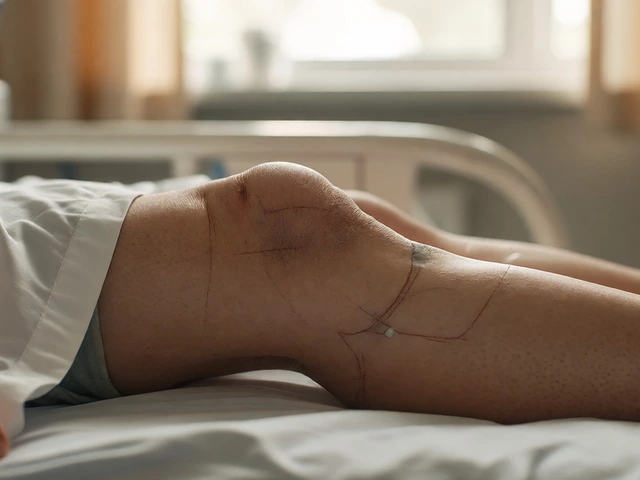
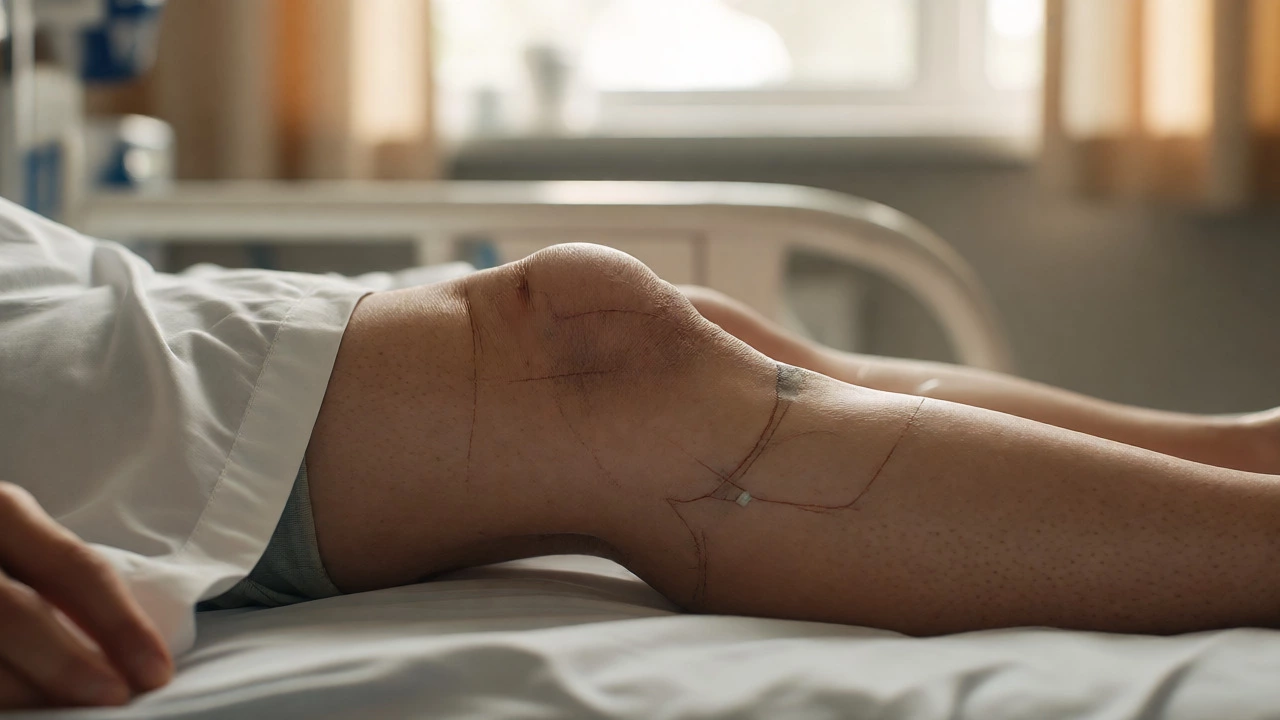
You’ve just had your knee replacement and you’re staring at your leg, wondering why it feels like a rusted hinge. You can’t fully straighten it. You can’t bend it past 90 degrees. It’s tight, sore, and honestly, a bit scary. The big question keeping you up at night is simple: does this stiffness ever actually go away?
The short answer is yes, for the vast majority of people. But here is the nuance nobody tells you upfront: "going away" doesn't mean returning to the flexibility of your teenage years. It means reaching a functional range of motion that lets you walk without a limp, climb stairs comfortably, and sit in a chair without pain. For most patients, significant improvement happens in the first three months, but subtle gains can continue for up to two years. If you are stuck in the early phase, know that stiffness is not a failure-it’s a biological response to trauma that requires specific work to undo.
Why Your New Knee Feels Like Concrete
It feels counterintuitive, right? The surgeon removed the arthritic bone and cartilage, replaced it with smooth metal and plastic, yet your knee feels stiffer than before. This happens because stiffness isn't just about the joint surfaces; it’s about the soft tissues surrounding them.
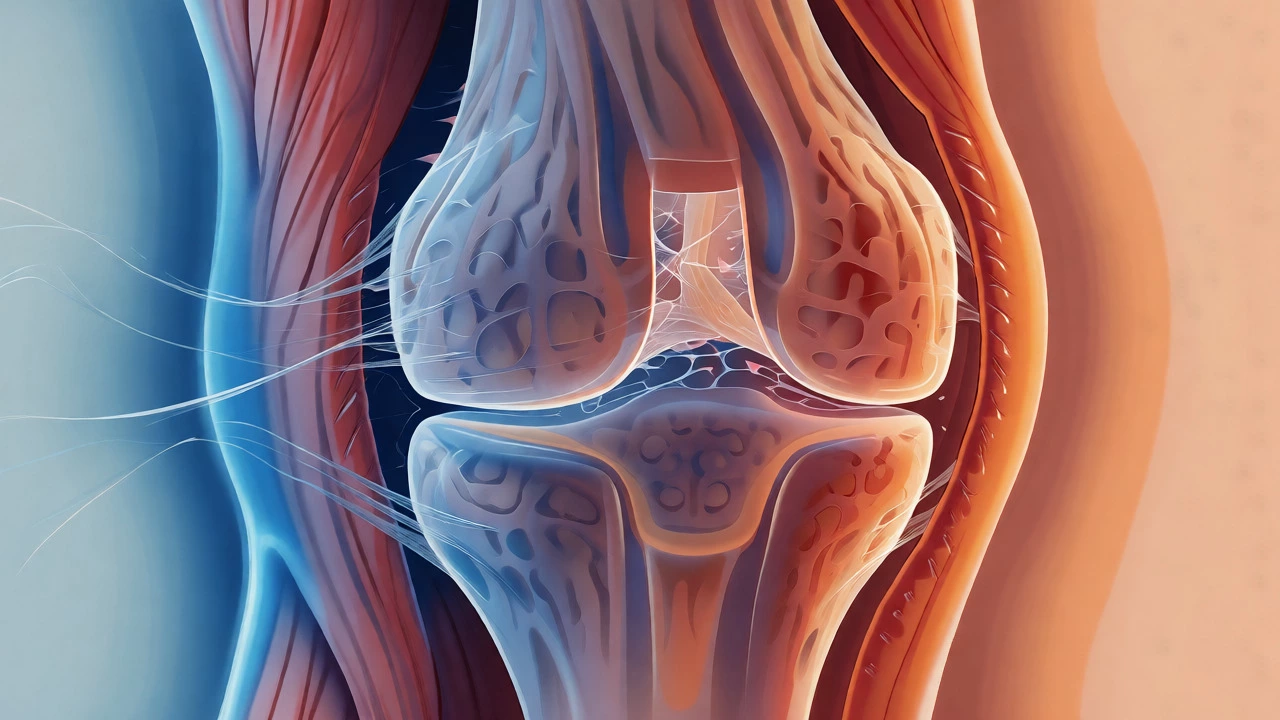
During surgery, surgeons must cut through skin, fat, and muscle to get to the bone. They also manipulate the ligaments and tendons to expose the joint. This creates micro-tears and inflammation. Your body responds by producing scar tissue (fibrosis) as part of the healing process. If left alone, this scar tissue contracts and tightens, essentially gluing down the layers of tissue around your new implant. Think of it like glue drying on a hinge-if you don’t move it while it dries, it stays stuck.
Another culprit is swelling. Post-operative edema increases pressure inside the joint capsule. When fluid builds up, the joint physically cannot expand to its full capacity. Until that swelling subsides, you are fighting against hydraulic pressure every time you try to bend or straighten your leg.
The Realistic Recovery Timeline for Range of Motion
Setting expectations is half the battle. If you expect to touch your toes by week two, you’ll be disappointed. Orthopedic guidelines generally track progress by degrees of flexion (bending) and extension (straightening).
| Timeframe | Expected Flexion (Bend) | Expected Extension (Straight) | Status |
|---|---|---|---|
| Weeks 1-2 | 0-60 degrees | 0-5 degrees deficit | High pain, high swelling, focus on waking up muscles. |
| Weeks 3-6 | 60-90 degrees | Full extension (0 degrees) | Scar tissue forming. Critical window for stretching. |
| Months 2-3 | 90-110 degrees | Normal gait mechanics | Stiffness plateaus often occur here. Push through carefully. |
| Months 4-6 | 110-120+ degrees | Full strength return | Functional activities resume. Minor residual tightness may remain. |
| Month 12+ | 120-130 degrees | Maintenance | Final adaptation. Soft tissues fully matured. |
Notice the emphasis on extension (straightening) in the first six weeks. Many patients obsess over bending, but failing to fully straighten the leg causes a permanent limp. A knee that bends to 120 degrees but won’t straighten is functionally worse than one that bends to 90 degrees but locks out flat. Prioritize getting that heel down flat on the bed or floor.
When Is Stiffness No Longer Normal?
While some tightness is expected, there is a condition called Arthrofibrosis, which is excessive scar tissue formation that severely limits movement. If you hit the three-month mark and still cannot bend your knee past 90 degrees, or if you have a fixed flexion contracture (you physically cannot straighten the leg) greater than 10 degrees, you need to talk to your surgeon.
Other red flags include:
- Pain that gets significantly worse after week six rather than better.
- A sudden loss of range of motion you previously achieved.
- Visible heat or redness combined with stiffness, which could indicate infection.
- A feeling of mechanical blockage, like something is catching inside the joint.
If you suspect Arthrofibrosis, do not wait. Early intervention yields much better results than waiting until the scar tissue matures and hardens completely.
How to Actually Break the Stiffness
Passive rest is the enemy of mobility. You cannot stretch a cold, swollen joint effectively. Here is the protocol that works best for breaking up adhesions without causing damage.
Heat Before, Ice After: Apply a warm pack for 15 minutes before your exercises. This increases blood flow and makes the collagen fibers in your scar tissue more pliable. Immediately after exercising, ice the knee for 20 minutes to control the inflammation triggered by the movement. This contrast therapy helps manage the cycle of pain and swelling.
Frequency Over Intensity: Ten gentle stretches throughout the day are far superior to one brutal hour-long session. Scar tissue responds to consistent, low-load stress. Trying to force a deep bend once a day often leads to muscle guarding-your muscles tighten up to protect the joint, making the stiffness worse.
Continuous Passive Motion (CPM): While evidence varies, many patients find relief using a CPM machine set to their comfortable limit. It keeps the joint moving gently during sleep or rest periods, preventing the tissues from tightening overnight.
The Role of Physical Therapy vs. Home Exercise
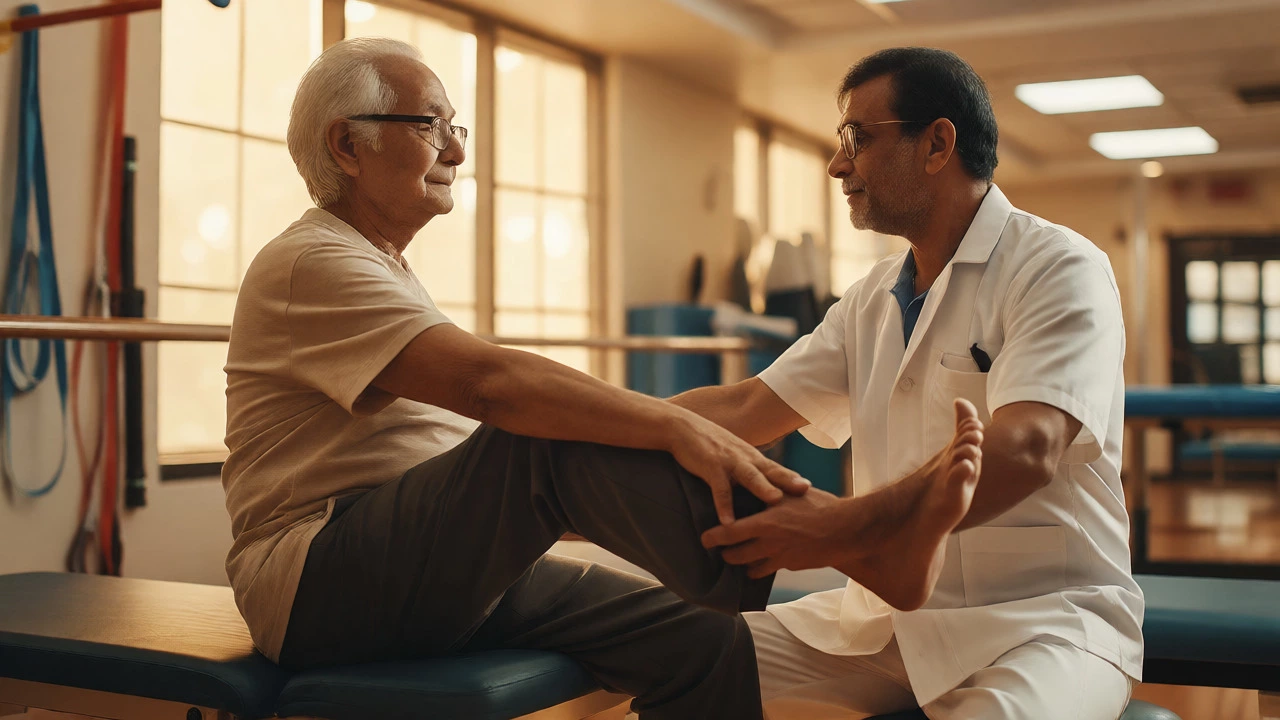
Can you fix this yourself? Yes, but only if you are disciplined. Physical therapists provide hands-on mobilization techniques that are difficult to replicate at home. They can perform joint mobilizations where they glide the tibia relative to the femur, addressing restrictions that stretching alone misses.
However, the bulk of the work is yours. Studies suggest that patient compliance with home exercise programs is the single biggest predictor of final range of motion. If you skip exercises because they hurt, the stiffness wins. Find the balance between discomfort (stretching sensation) and pain (sharp, stabbing, or worsening ache). Discomfort is okay; sharp pain is a stop sign.
Psychological Factors: Fear Avoidance
This is rarely discussed in medical brochures but is huge in practice. Many patients develop fear-avoidance behavior. Because the knee hurt so badly before surgery, and hurts now during rehab, the brain associates movement with danger. You subconsciously limit your movement to avoid pain, which perpetuates the stiffness.
Trust the structure of your new knee. The titanium alloy and polyethylene insert are incredibly durable. You will not dislocate a standard total knee replacement by doing your quad sets or heel slides. Acknowledge the fear, but move anyway. Confidence in the implant allows for deeper, more effective stretching.
What If It Never Fully Resolves?
Let’s be real. About 10-15% of patients report persistent stiffness even a year later. Does this mean the surgery failed? Not necessarily. It might mean you have a slightly higher baseline of fibrosis, or perhaps the surgical approach required more tissue disruption. As long as you have functional mobility-you can walk, drive, and handle daily tasks-the stiffness is an inconvenience, not a disability.
In severe cases where range of motion is critically limited (e.g., less than 70 degrees of flexion), doctors may recommend manipulation under anesthesia (MUA). This involves sedating the patient and forcefully bending the knee to break up scar tissue bands. It sounds dramatic, but it is a common, minimally invasive procedure that can restore motion quickly when conservative methods fail.
How long does knee stiffness last after replacement?
Most acute stiffness resolves within 6 to 12 weeks. However, gradual improvements in range of motion can continue for 12 to 24 months post-surgery. By the one-year mark, your range of motion should be stable.
Is it normal to feel tightness in the back of the knee?
Yes, posterior tightness is very common due to hamstring tension and swelling in the popliteal fossa (the hollow behind the knee). Gentle hamstring stretches and avoiding prolonged sitting with bent knees help alleviate this.
Can I make my knee stiffer by exercising too much?
You can increase swelling and pain, which indirectly causes stiffness due to muscle guarding. Overdoing it leads to increased inflammation, making the joint feel tighter temporarily. Consistency with moderate intensity is better than sporadic high-intensity sessions.
Does weather affect knee stiffness after surgery?
Many patients report increased stiffness and ache during cold or humid weather. While the artificial joint itself doesn't have nerves, the surrounding soft tissues and bone interfaces do react to pressure changes, leading to temporary sensations of tightness.
What is Arthrofibrosis?
Arthrofibrosis is a complication characterized by excessive scar tissue formation inside the joint, leading to significant loss of motion and pain. It affects roughly 5-10% of knee replacement patients and may require manipulation or surgical lysis of adhesions if severe.