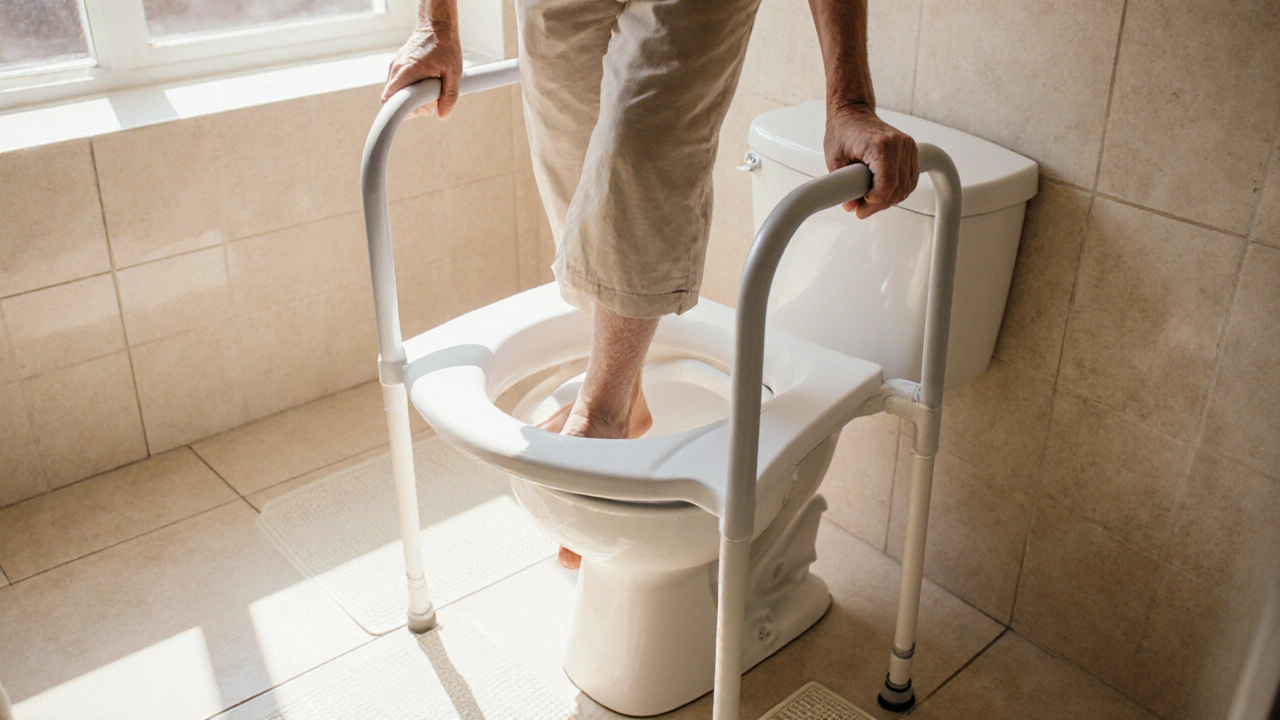
Toilet Seat Height After Surgery: What You Need to Know for Safe Recovery
When you’re recovering from surgery—especially hip, knee, or spinal procedures—toilet seat height, the vertical distance from the floor to the top of the toilet seat. Also known as toilet elevation, it’s not just a minor detail—it’s a key part of your safety and comfort during recovery. Too low, and you’re forcing your joints into painful positions. Too high, and you lose stability. For many patients, getting this right means the difference between a smooth recovery and a setback.
After joint replacement or spinal surgery, doctors often recommend a toilet seat height between 17 to 19 inches from the floor. That’s about 2 to 4 inches taller than a standard toilet. Why? Because it reduces the angle your hips and knees need to bend, lowering strain on healing tissues. Studies show patients who use raised toilet seats after knee replacement report less pain and faster mobility. It’s not magic—it’s physics. Lowering your body requires more muscle effort, and after surgery, your muscles are weak, sore, or restricted. A higher seat means less work, fewer falls, and less risk of dislocation.
But height isn’t the only thing that matters. raised toilet seats, removable or permanent attachments that increase the height of a standard toilet. Also known as toilet risers, they come in many forms—plastic frames, padded cushions, or bolt-on units. Some include armrests for extra support, which is especially helpful if you’re recovering from hip surgery or have balance issues. Others are lightweight and portable, so you can use them at home or even while traveling. The best choice depends on your mobility, strength, and whether you need long-term use or just a few weeks of help.
Don’t assume your home toilet is fine just because it’s "normal." Standard toilets in the U.S. are usually 14 to 15 inches high—too low for most post-surgery patients. Even if you feel okay standing up, forcing your body into awkward angles can lead to swelling, stiffness, or even re-injury. Many patients don’t realize this until they struggle in the bathroom and end up calling their physical therapist. It’s a common problem—and an easy fix.
When choosing a solution, measure your current toilet first. Then test a few options. Some stores let you try them before buying. Look for non-slip bases, easy cleaning, and weight limits that match your needs. If you’re unsure, ask your physical therapist or occupational therapist—they’ve seen hundreds of cases and know what works. In some cases, insurance or Medicare may cover the cost if it’s prescribed as durable medical equipment.
Recovery isn’t just about the surgery. It’s about the little things—how you sit, how you stand, how you get through the day without pain. The right toilet seat height after surgery might seem small, but it’s one of the most practical, overlooked tools in your recovery toolkit. And when you get it right, you’re not just avoiding discomfort—you’re protecting your progress.
Below, you’ll find real advice from patients and experts on what works after different types of surgery—from knee replacements to spinal fusion—and how to make your bathroom safer without spending a fortune.