Knee Surgery Toilet: What You Need to Know About Bathroom Safety After Knee Replacement
When you’re recovering from knee surgery, a major orthopedic procedure that replaces or repairs damaged knee joints. Also known as total knee replacement, it’s one of the most common surgeries in India, with over 200,000 performed yearly. But the real challenge doesn’t happen in the hospital—it starts when you get home and try to use the toilet, a simple fixture that becomes a major obstacle after knee replacement.
After knee surgery, bending past 90 degrees is often forbidden for weeks. That means sitting down or standing up from a regular toilet can be painful, risky, or even impossible. Many patients end up falling because they don’t realize how high their toilet needs to be. The average Indian toilet seat sits around 14 to 15 inches off the floor—too low for most knee replacement patients. Experts recommend a height of at least 17 to 19 inches. That’s why raised toilet seats, toilet safety frames, and even portable commodes become essential tools during recovery. These aren’t luxuries—they’re medical necessities. A 2023 study in the Indian Journal of Orthopaedics found that patients who used a raised toilet seat had 68% fewer falls in the first two weeks after surgery.
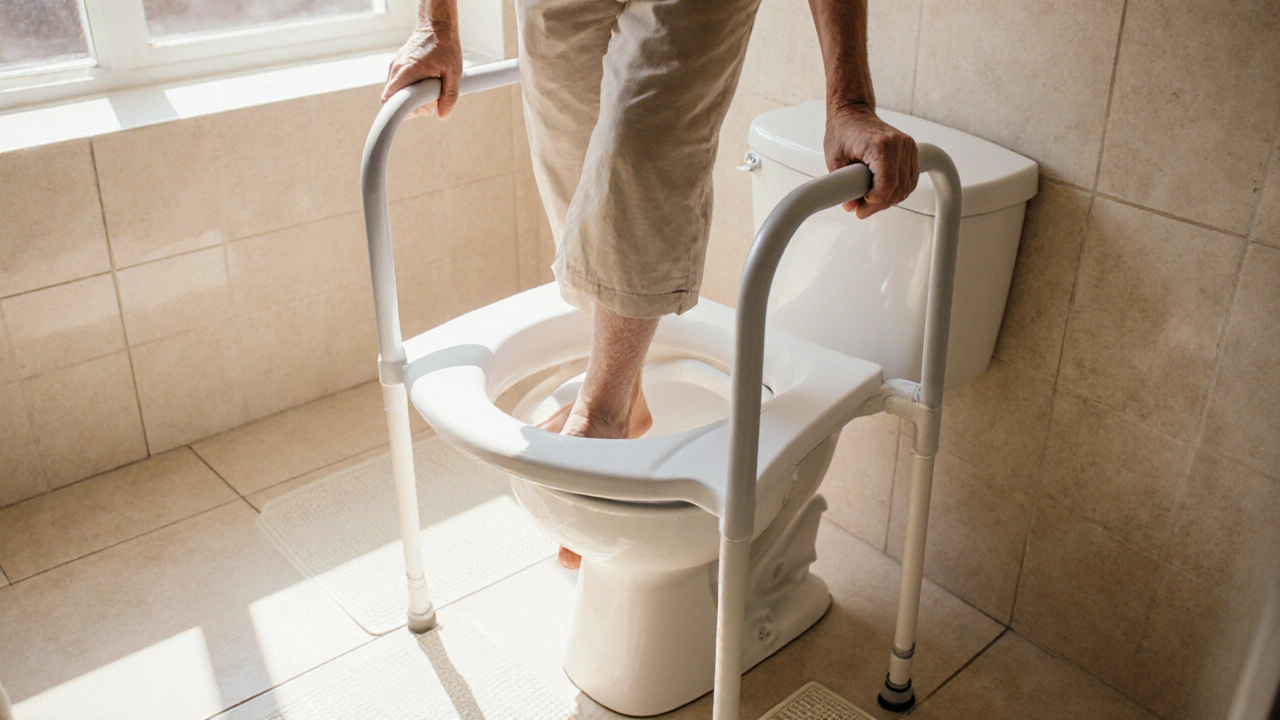
It’s not just about height. You also need stability. A standard toilet offers no handholds. That’s where toilet safety frames, a metal frame with armrests that fits over the toilet come in. They give you something solid to push off from when standing and something to hold onto when sitting. Some even come with built-in storage for wipes or medications. And don’t forget the little things: non-slip mats, grab bars near the toilet, and keeping the bathroom floor dry. These aren’t optional. One slip can mean a new fracture, a trip back to the hospital, or months of delayed recovery.
Most patients don’t realize how long this phase lasts. It’s not just the first week. For many, using the toilet safely takes 4 to 6 weeks. Some need up to 3 months before they can sit down without pain or fear. That’s why so many people end up using a bedside commode at night—it’s easier than walking to the bathroom in the dark. And if you live in a home with stairs or no bathroom on the ground floor, you might need to rearrange your living space entirely. Temporary mobility solutions aren’t just helpful—they’re life-changing.
What you’ll find in the posts below are real, practical stories from people who’ve been through it. You’ll see what raised toilet seats actually work in Indian homes, how to install grab bars without remodeling, and what mistakes to avoid when getting up from the toilet after knee surgery. There’s no guesswork here—just clear advice from patients and therapists who’ve seen what helps and what doesn’t. Whether you’re preparing for surgery or helping someone recover, this collection gives you the exact tools you need to stay safe, avoid pain, and get back on your feet faster.