Chemo Cycle: What It Is, How It Works, and What to Expect
When doctors talk about a chemo cycle, a scheduled period of chemotherapy treatment followed by a rest phase to let the body recover. It's not one continuous drug infusion—it's a carefully timed sequence designed to kill cancer cells while giving healthy ones a chance to heal. Think of it like hitting a reset button: you get the treatment, then you pause. That pause isn’t laziness—it’s science. Cancer cells grow fast, but so do your bone marrow, hair follicles, and gut lining. Chemo doesn’t know the difference. The break between cycles lets your body catch up.
A typical chemo cycle, a scheduled period of chemotherapy treatment followed by a rest phase to let the body recover lasts anywhere from 2 to 6 weeks, depending on the drug, the cancer type, and how your body handles it. You might get treatment on day one, then rest for 13 days, then repeat. Or you might get it every Monday for three weeks, then take the fourth week off. Some cycles are daily for a week, others are just one day every three weeks. The pattern isn’t random—it’s based on how long the drug stays active in your blood and how long your body needs to rebuild its defenses. chemotherapy treatment, the use of drugs to destroy cancer cells by targeting rapidly dividing cells isn’t a one-size-fits-all. A breast cancer chemo cycle looks different from a leukemia one. Even two people with the same cancer might get different cycles based on age, weight, kidney function, or how they responded to earlier rounds.
Why do some people need four cycles and others need six? It’s not about how bad the cancer is—it’s about how the drugs work together. Many chemo regimens use multiple drugs that attack cancer in different ways. Each cycle adds another layer of damage to the tumor. The goal isn’t always to wipe it out in one go. Sometimes it’s to shrink it enough for surgery, or to keep it from spreading while other treatments kick in. And yes, side effects like fatigue, nausea, or hair loss often build up over cycles. That’s why rest periods aren’t just nice—they’re necessary. Skipping them can lead to dangerous drops in white blood cells or permanent nerve damage.
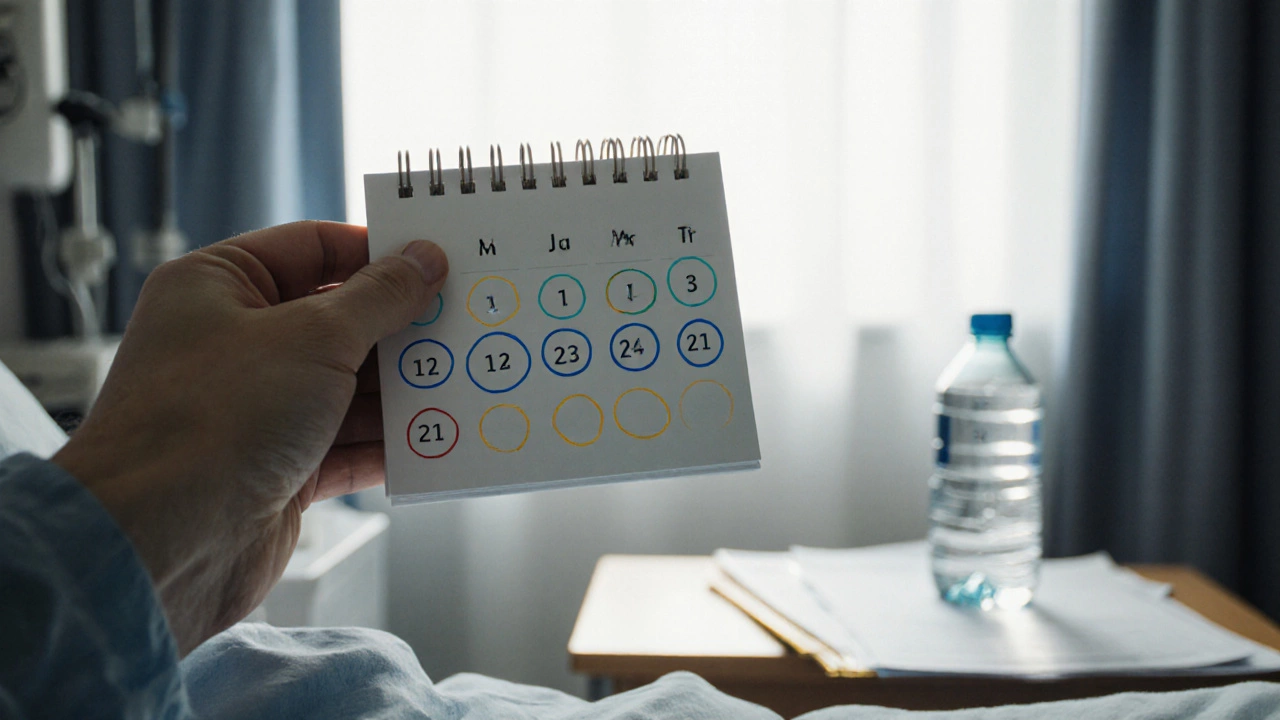
You’ll hear terms like cancer treatment cycles, repeated rounds of medical therapy spaced with recovery periods to manage side effects and maximize effectiveness or cancer therapy schedule, the planned timeline of drug administration and recovery intervals during oncology treatment. These aren’t buzzwords—they’re your roadmap. Your oncology team will give you a calendar: when to take pills, when to come in for IVs, when to get blood tests. Stick to it. Missing a cycle can reduce effectiveness. Pushing through when you’re too weak can land you in the hospital. This isn’t a marathon you run alone. It’s a team sport with nurses, pharmacists, and your own body as key players.
What you’ll find in the posts below aren’t generic brochures. They’re real stories and clear breakdowns from people who’ve walked through chemo cycles—what the days felt like, how they managed side effects, what surprised them, and what helped them keep going. You’ll see how one person handled nausea with ginger tea instead of pills, how another tracked their energy levels across cycles, and why some patients chose to delay a cycle to attend a child’s graduation. This isn’t just medical info. It’s lived experience. And it’s all here, ready for you when you’re ready for it.